Discriminative and Generative
Overview
Artificial Intelligence (AI) refers to the ability of machines to mimic human cognitive functions like learning and problem-solving. It can be broadly categorized into two types:
- Discriminative AI
- Generative AI
Discriminative AI
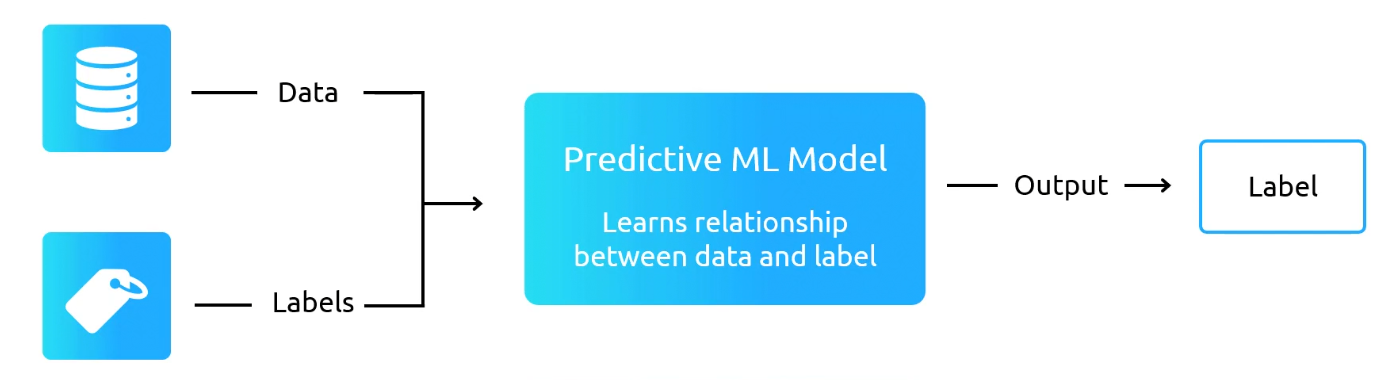
Discriminative AI focuses on classification tasks and predictions based on models trained using supervised learning techniques. It learns from labeled datasets to distinguish between different classes or categories.
- Works with labeled data to predict outcomes
- Commonly used for classification and anomaly detection tasks
Discriminative models learn the relationship between input data and labels, often predicting a number, class, or probability. An example is detecting machine anomalies based on sensor data.
Generative AI
Generative AI, on the other hand, is trained using unsupervised or semi-supervised learning techniques. It is capable of generating new data that mimics the patterns of the training data.
- Often uses large datasets of unstructured content
- Can generate creative content like images, text, or music
Generative AI models focus on understanding the patterns within data and producing new, similar content. For instance, it can generate text in natural language such as English.
