Design Patterns
Software Design Patterns in MLOps
Design patterns are reusable solutions to common problems in software development, especially useful in machine learning operations (MLOps).
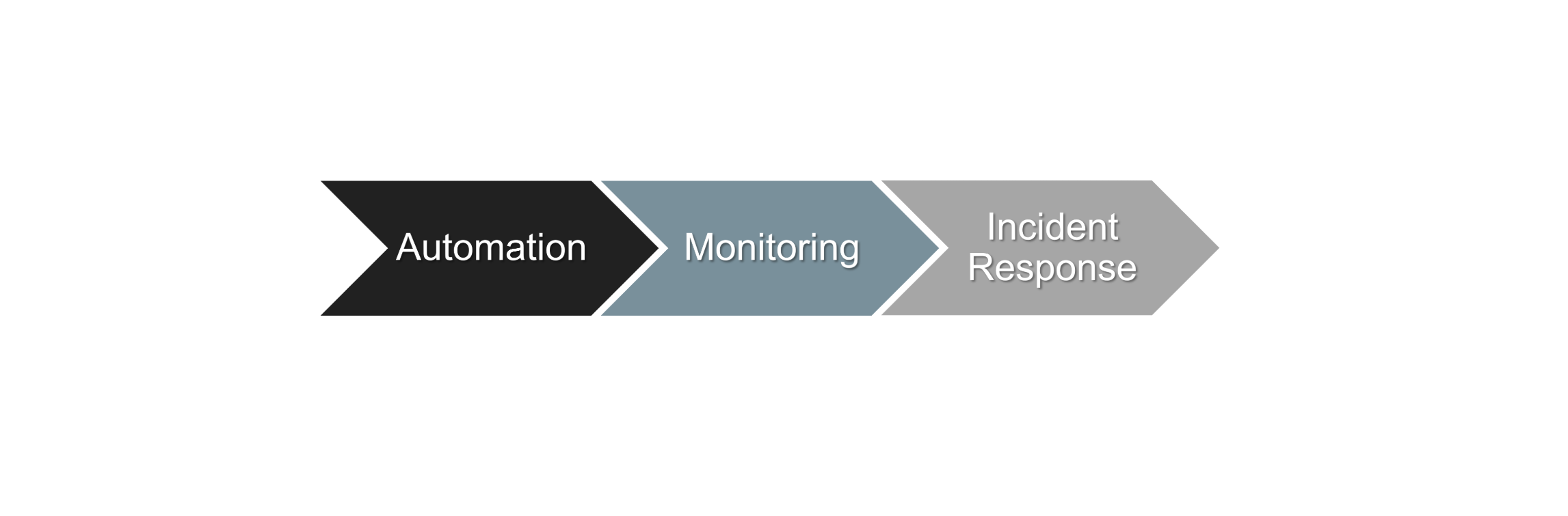
Automate, Monitor, Respond
The Automate, Monitor, Respond pattern enhances system reliability by automating tasks, monitoring performance, and responding to issues.
Key MLOps Design Patterns
Three main design patterns are crucial for MLOps systems:
- Automated model retraining
- Model rollback
- Feature imputation
Automated Model Retraining
To maintain model performance over time, automated retraining ensures the model stays current.
-
Run predictions
- Use the latest trained model to generate predictions.
- Continuously monitor prediction accuracy.
-
Monitor performance
- Track statistics and detect performance dips.
- Trigger retraining when performance falls below the threshold.
-
Retrain and deploy
- Extract new data from the feature store for retraining.
- Automatically deploy the updated model.
Model Rollback
If a new model fails to perform well, rollback to the last successful version.
-
Validation fail
- The model fails the performance validation.
- Rollback is triggered to revert to a working model.
-
Restore previous model
- Automatically revert to last functional model version.
- Ensure stability with the rollback model.
-
Redeploy the old model
- Deploy previous model version to the prediction service.
- Minimize downtime while solving issues.
Feature Imputation
Handle missing data by automatically imputing values to maintain model accuracy.
-
Data quality check
- Monitor feature data for missing values.
- Trigger alarms when missing data exceeds a set threshold.
-
Impute missing data
- Use mean/median for numerical features.
- Use frequent category or "missing" category for categorical features.
-
Fix defective features
- Automatically replace missing data with statistical estimates.
- Ensure the data is complete for model training.