Orchestration
ML Pipelines
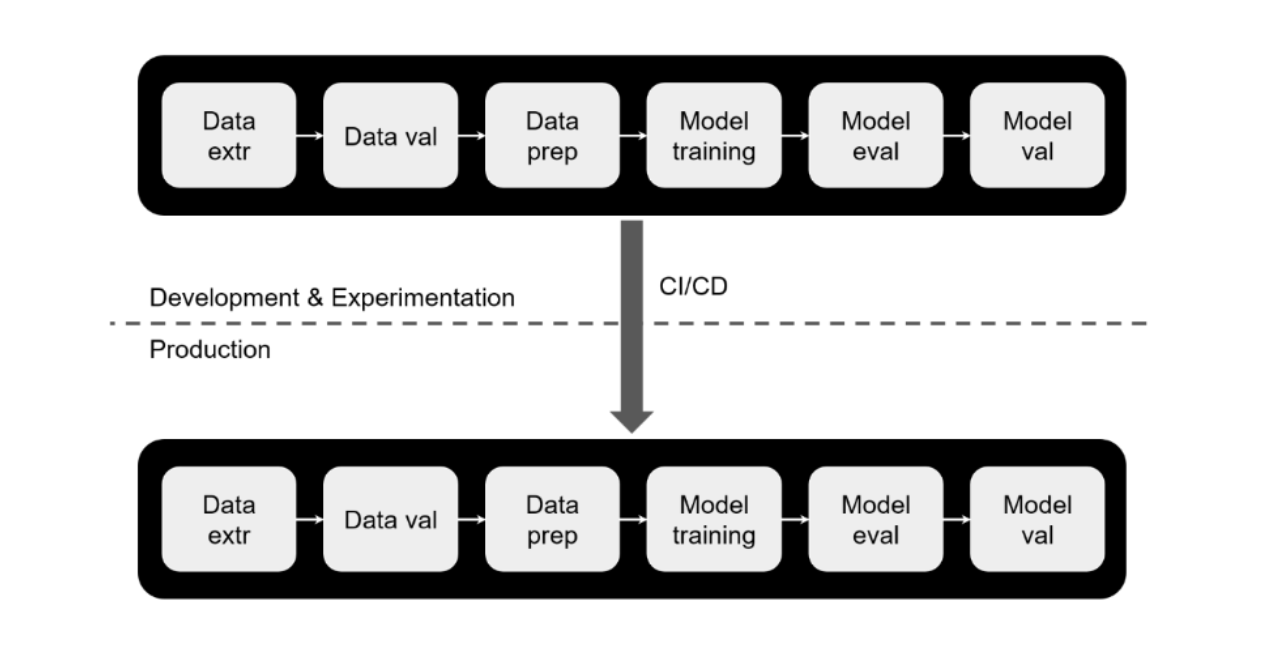
ML pipelines are central to MLOps systems. They run in both development and production environments. They ensure a smooth flow from model creation to deployment.
- Allows quick iterations
- Helps validate new algorithms
- Run pipelines automatically
- Triggered by specific events
ML pipelines help teams experiment with models in development and deploy them seamlessly in production.
Modularity and Reusability
ML pipelines are designed in a modular way, which allows independent changes to individual components without disrupting the entire system.
- Components are independent
- Allows focused updates
- Easy to reuse across tasks
ML pipelines can be easily adapted to different tasks and data sets, making them highly reusable and efficient in MLOps systems.
Orchestration and Automation
Orchestration in MLOps refers to automating the flow of tasks within ML pipelines. This includes managing dependencies and executing tasks in sequence.
- Schedule and coordinate tasks
- Ensures no task is missed
- Monitor task execution
- Provides alerts on errors
Orchestration streamlines the process, reduces manual errors, and ensures tasks are executed in the right order.
Direct Acyclic Graphs (DAGs)
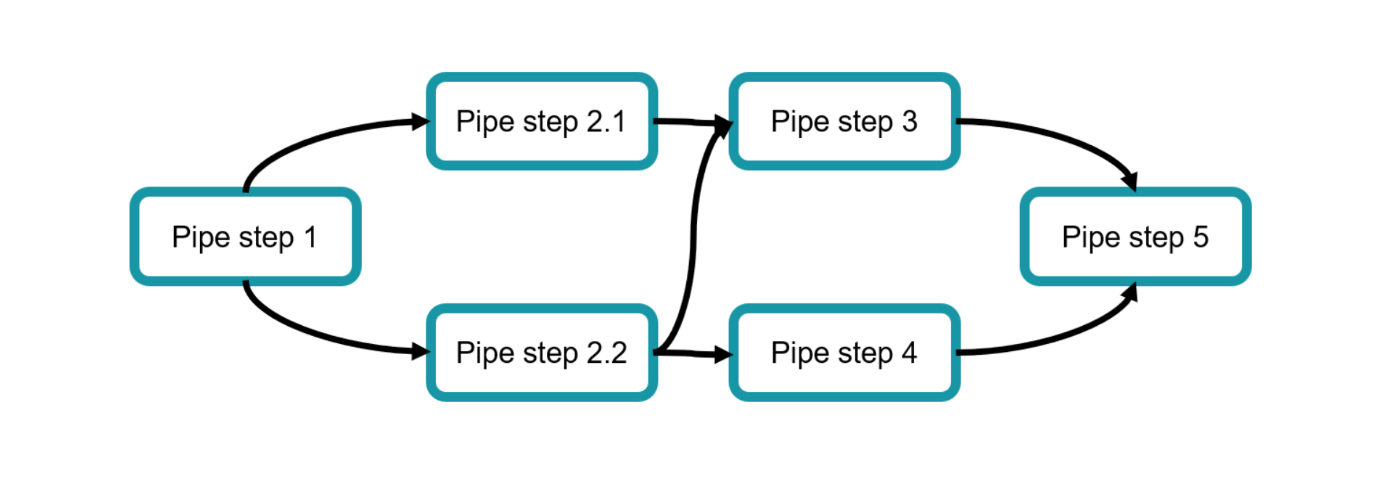
DAGs are graphical representations of the flow of tasks in an ML pipeline that shows dependencies between each step.
- Makes complex workflows more understandable
- Helps maintain reproducibility
- Each step is a node, and relationships as edges
DAGs controls task execution order, making it easier to manage and track tasks.
Orchestration in ML Environments
Development & Experimentation
In development environments, orchestration helps manage the end-to-end flow of tasks, such as training models and evaluating results.
- Ensures all steps are executed
- Keeps results organized
- Run experiments in parallel
- Reduces experimentation time
Production
Orchestration automates the deployment process in production and ensures that ML models are consistently and reliably updated.
- Reduces manual intervention
- Ensures models are up-to-date
- Manage deployment steps
Pipeline Oochestration in production provides centralized monitoring which simplifies troubleshooting and resolving issues.