AWS CodePipeline
Updated Jul 26, 2020 ·
NOTES
This is not an exhaustive documentation of all the existing AWS Services. These are summarized notes that I used for the AWS Certifications.
To see the complete documentation, please go to: AWS documentation
Overview
AWS CodePipeline is a fully managed continuous delivery service that helps you automate your release pipelines for fast and reliable application and infrastructure updates.
- Continuous delivery
- Visual workflow
- Source: GitHub, CodeCommit, Amazon S3
- Build: CodeBuild, Jenkins, etc...
- Load Testing: 3rd par ty tools
- Deploy: AWS CodeDeploy, Beanstalk, CloudFormation, ECS...
- Made of stages:
- Each stage can have sequential actions and / or parallel actions.
- Stages examples: Build, Test, Deploy, Load Test, etc...
- Manual approval can be defined at any stage.
CodePipeline Artifacts
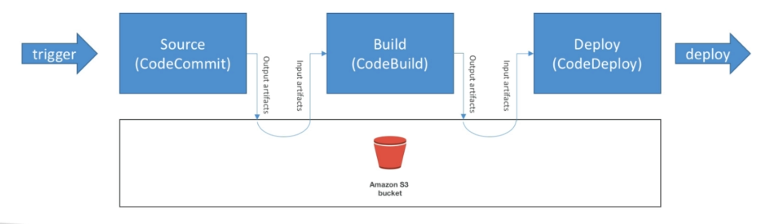
Each pipeline stage can create Artifacts. Amazon S3 buckets that CodePipeline uses to store artifacts used by pipelines. When you first use the CodePipeline console in a region to create a pipeline, CodePipeline automatically generates this S3 bucket in the AWS region.
CodePipeline Troubleshooting
- CodePipeline state changes happen in AWS CloudWatch Events, which can in return create SNS notifications.
- Example: We can create events for failed pipelines • Ex: you can create events for cancelled stages.
- If CodePipeline fails a stage, your pipeline stops and you can get information in the console.
- AWS CloudTrail can be used to audit AWS API calls.
- If Pipeline can't perform an action, make sure the “IAM Service Role” attached does have enough permissions (IAM Policy).