70 posts tagged with "Books"

View All Tags

Libro: What I Talk About When I Talk About Running

· 2 min read

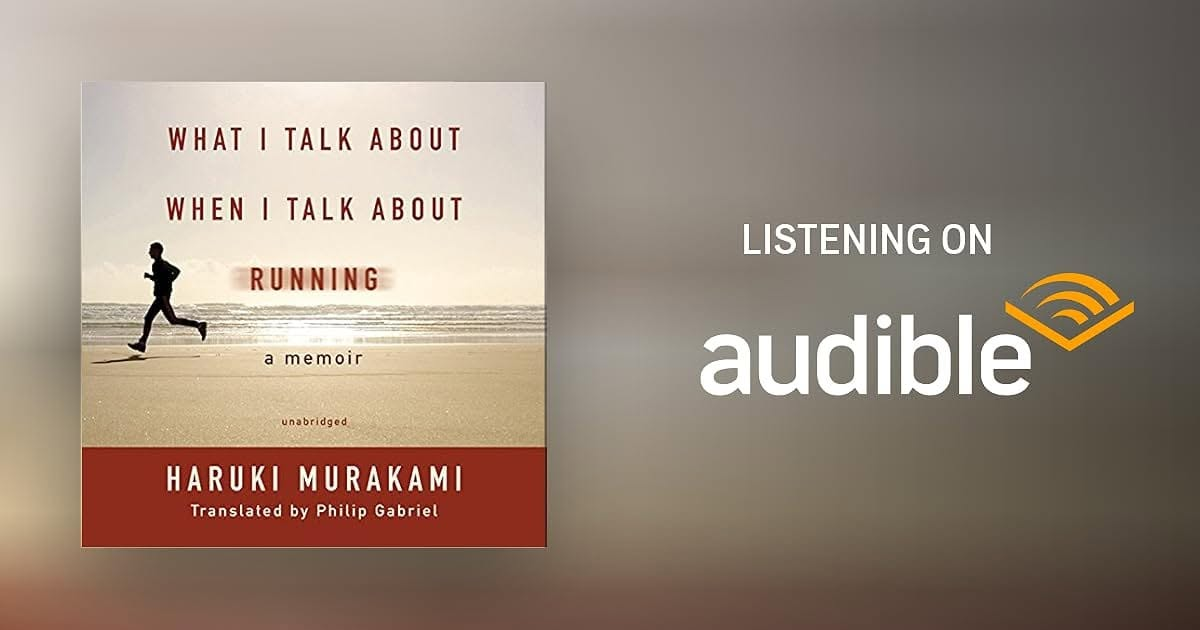
What I Talk About When I Talk About Running, by Haruki Murakami

Book 1 of 2024
alt text

Well, this is technically the third book I've finished since January.

I wrapped this one up around mid-February, but I only recently decided to start keeping track of my reads just to see how many I can actually finish before the year ends.

The biggest takeaway for me:

Even the most ordinary thing can turn into something deep, almost meditative, if you stick with it long enough.

Running sounds simple.

You put one foot in front of the other and keep going.

But do it consistently for years and it becomes more than just exercise. It becomes routine, discipline, solitude, reflection, and sometimes a way of understanding yourself a little better.

And I think that applies to a lot of things.

Writing.

Learning.

Work.

Anything that requires you to show up again and again, even on days when nothing particularly exciting happens.

Not everything has to feel profound while you're doing it.

Sometimes the meaning only shows up after you've done the ordinary thing long enough to look back and realize how much it changed you.

Keep moving.

The distance adds up.
Libro: So Good They Can't Ignore You

· 2 min read

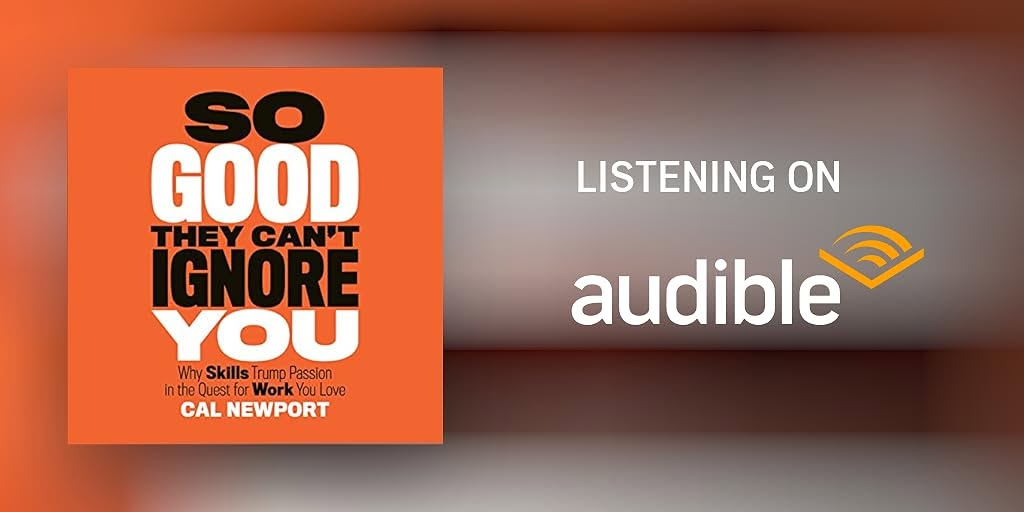
So Good They Can't Ignore You, by Cal Newport

Book 2 of 2024

alt text

Lots of really good advice in this one, but the idea that stuck with me most was this:

“Follow your passion” can actually be pretty bad career advice.

Not because passion is useless, but because at the start of a career, most of us don't really know yet what kind of work will give us the most satisfaction, freedom, or control.

Sometimes passion doesn't come first.

Sometimes competence does.

The book talks about shifting from a passion mindset to a craftsman mindset.

The passion mindset asks: What can the world offer me?

The craftsman mindset asks: What can I offer the world?

That difference sounds small, but it changes how you approach work.

Instead of constantly asking whether you've already found the perfect job, the perfect field, or the thing you're “meant” to do, you focus first on becoming really good at something valuable.

Explore different things, even interests that seem indirect or unrelated.

Stretch your abilities beyond what already feels comfortable.

And don't just play around with your craft.

Practice it.

Deliberately.

Push against the areas where you're still weak.

At the beginning of any career, it's difficult to draw a straight line toward the work that will eventually give you the most satisfaction and control. Most of the time, you only figure that out by trying things, developing skills, and paying attention to where those skills start opening doors.

And somewhere along the way, you might not even notice how much better you've become.

But other people will.

Maybe that's the point.

Don't wait until you magically discover something you're passionate about before you start getting good.

Get good at something worth doing.

Passion might catch up later.

Libro: Shoe Dog

· 2 min read

Shoe Dog, by Phil Knight

“Catalog the past, map out the future. Don't settle for a job or a profession. Seek a calling, even if you don't know what it means. The fatigue will be easier to bear, the disappointments will be fuel, the highs will be like nothing you've ever felt.”

alt text

Finished the audiobook for the third time.

The first was back in 2017, then again in 2019. After a couple of years mostly focused on work, staying at home, and just trying to manage life as it came, I finally played this gem again.

Noice.

What I like about Shoe Dog is that the story never really feels like some perfectly calculated path toward success.

A lot of it is uncertainty.

Bad decisions.

Cash problems.

People taking chances on ideas that could have easily failed.

Plans changing because reality had other ideas.

And yet, they kept moving.

I think that's what stayed with me this time around.

Regardless of whether the scales are tipping in your favor, you still have to work with whatever is in front of you.

The resources you have.

The people willing to help.

The mistakes you've already made.

The opportunities that somehow survived all of those mistakes.

You don't always get ideal conditions before starting something.

Sometimes you just start, adjust along the way, take the hits, and figure out the next move when you get there.

Maybe the path becomes clearer later.

Maybe it doesn't.

Either way, you keep moving.

In short:

Just do it.

Libro: Project Hail Mary

· One min read

Project Hail Mary, by Andy Weir

“I’m smart enough now to know I’m stupid. That’s progress.”

alt text

I will skip the heavy plot twists because going into this one blind is half the fun.

It starts with a guy named "Ryland Grace" waking up with total amnesia on a spaceship, completely unsure of his own name, let alone why he is floating through deep space.

Gradually, through flashbacks and frantic experiments, he pieces together a horrifying reality.

  • A spaceborne microbe is eating the sun
  • Earth is freezing
  • He was sent on a one-way mission to find out why one single star is immune

If you loved The Martian, this takes that exact same formula and actually cranks it up.

Except this time, he is not entirely alone.


EDIT: I also just realized something.

The ship is called Hail Mary.

The guy's name is Grace.

So, it's technically, Hail Mary, full of grace.

Libro: The Martian

· One min read

The Martian, by Andy Weir

"I'm pretty much fucked. That is my considered opinion."

alt text

I feel like returning to this one book is always a blast.

If you have only seen the movie, you already know the setup where astronaut Mark Watney gets left behind on Mars after a dust storm forces an emergency evacuation.

What the movie trims down, though, is just how much math, engineering, and duct tape goes into surviving on a dead planet. Almost the entire book is made up of Mark's mission logs, detailing how he handles daily crises:

  1. Fixing sudden oxygen leaks.
  2. Clearing solar panels covered in fine dust.
  3. Driving across kilometers of wasteland in a rover that constantly breaks down.

The thing I like about this, is that, Mark does not sit around despairing.

He swears, figures out the physics, and starts working the problem.

And I pretty much relate to that.

Libro: Peak

· One min read

Peak: Secrets from the New Science of Expertise, by Anders Ericsson and Robert Pool

alt text

All in all, this book is a goldmine of ideas on learning, practice, and improving at something over time.

It also strongly supports the idea of having a growth mindset.

We may all start with different talents, abilities, and advantages, but we are not completely defined by them.

You can learn just enough to do what the job requires.

Or you can keep pushing further.

Practice deliberately.

Work on the parts you're bad at.

Stretch beyond what already feels comfortable.

And, given enough time and the right kind of practice, move closer and closer to mastery.

Talent may give you a starting point.

It doesn't have to decide where you finish.

Libro: The Hard Thing About Hard Things

· 2 min read

alt text

Third time finishing this audiobook.

The first time was right out of college. The second was about a year later. And the third was just last week.

What struck me this time, and what I find pretty amazing, is how much my perspective toward the book has changed over the years.

The book itself stayed the same.

I didn't.

The first time I listened to it, a lot of the stories just sounded intense, impressive, and maybe even a little distant from where I was in life. Years later, some of the same parts started to make more sense because I had gone through more work, more uncertainty, more bad decisions, more pressure, and more moments where there really wasn't an obvious answer.

I think that's one of the best things about revisiting a book like this. Sometimes you don't really "outgrow" it. You just finally catch up to parts of it.

Best takeaway?

Ask the really good questions.

And how do you learn to ask really good questions?

By asking a lot of bad ones first.

By being wrong.

By missing things.

By asking something obvious.

By realizing afterward that you should've asked something else entirely.

Eventually, you get better at knowing which questions actually matter.

And yes, sometimes a whole shitload of courage really can clear paths and move mountains.

Libro: Dream Architects

· One min read

The Dream Architects: Adventures in the Video Game Industry, by David Polfeldt

“Curiosity is the ultimate proof of a mature craftsman. Understanding that change is good. Knowing that discovering you are wrong means growth.”

alt text

One of the things I liked about this book is how much it shows that creative work is rarely a straight line.

Games, like most things worth building, go through revisions, wrong assumptions, failed ideas, changing directions, and plenty of moments where someone has to admit:

Yeah, this isn't working.

And I think that takes a certain kind of maturity.

Not just being good at what you do, but staying curious enough to question what you already know.

Being willing to change your mind.

Being comfortable with finding out that your first idea was wrong.

Because being wrong doesn't always mean you failed.

Sometimes it just means you've learned enough to see the problem differently.

And yes, after finishing this, I somehow ended up appreciating the Avatar universe even more.

Oel ngati kameie.

Libro: Range

· 2 min read

"Great things are not done by impulse, but by a series of small things brought together." - Vincent van Gogh

To be a generalist or a specialist?

I used to think you eventually had to pick one.

But after reading Range by David Epstein, I think the more interesting answer is that maybe you don't have to rush into choosing at all.

Explore different domains.

Be curious about things outside your usual lane.

Try something, leave it, come back to it years later, and sometimes you'll be surprised by how useful those seemingly unrelated experiences become.

And when you do find something that really catches your interest, go deep.

Learn the stack.

Understand how things work underneath.

Get good enough at it that you can actually build, break, fix, and explain things.

But you also don't have to spend your entire life with your foot pressed against the gas.

Sometimes you can slow down.

Coast for a while.

Look around.

Try something else.

Then come back with a different perspective.

Maybe being a generalist and being a specialist aren't really opposites. You can explore broadly while still developing depth in the things that matter to you.

And as the world around you changes, some of what you know will become useful, some will become outdated, and some things you'll have to rethink completely.

Learn.

Unlearn.

Then learn again.

alt text

Libro: The First 20 Hours

· One min read

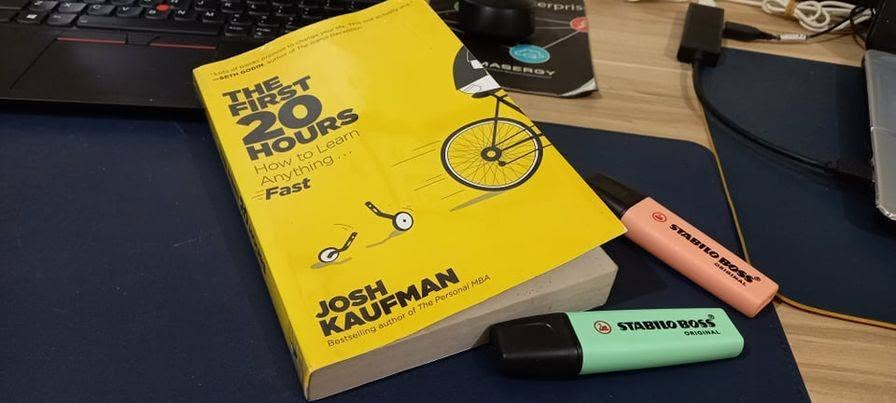
The First 20 Hours: How to Learn Anything... Fast, by Josh Kaufman

“A problem well stated is a problem half solved.”

alt text

Done with another re-read!

What I like about this book is that it makes learning feel less intimidating.

You don't have to become an expert right away.

You don't need to know everything before you start.

You just need to break the skill down, focus on what matters most, and spend enough deliberate time getting past that awkward stage where everything still feels unfamiliar.

That idea alone is pretty useful.

A lot of the time, we make learning harder than it needs to be because we look at the whole mountain instead of the next few steps.

Define what you actually want to learn.

Figure out the most important parts.

Practice those first.

Then keep going.

Simple in theory.

Still takes effort in practice.

But definitely easier than telling yourself you need to master everything before you can even begin.

Might go for The Martian next.

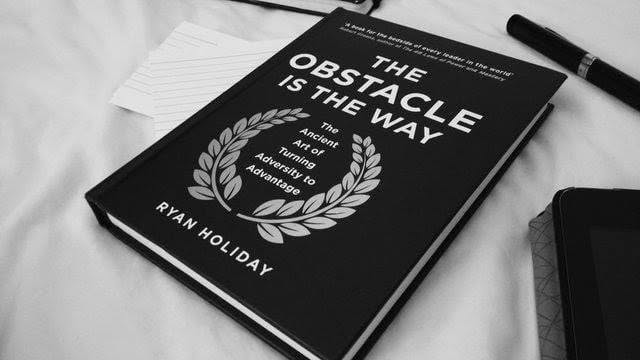
Libro: The Obstacle Is the Way

· One min read

The Obstacle Is the Way, by Ryan Holiday

alt text

Key takeaways:

  1. How you do anything is how you do everything.
  2. The impediment to action advances action.
  3. What stands in the way becomes the way.

It’s been about two years since I last picked up something non-technical, so this was a nice change of pace.

What I liked most is how simple the central idea is.

You don’t always get to remove the obstacle.

Sometimes you have to work with it.

A setback can force you to slow down, rethink your approach, or find a route you probably wouldn’t have considered if everything had gone smoothly.

That doesn’t mean every problem is secretly a blessing.

Sometimes a problem is just a problem.

But your response to it still matters.

You can spend all your energy wishing the situation were different, or you can start asking what can actually be done with what’s in front of you.

And maybe that’s where progress starts.

Anyway, good to be reading outside the technical stuff again.

Now, onto the next!

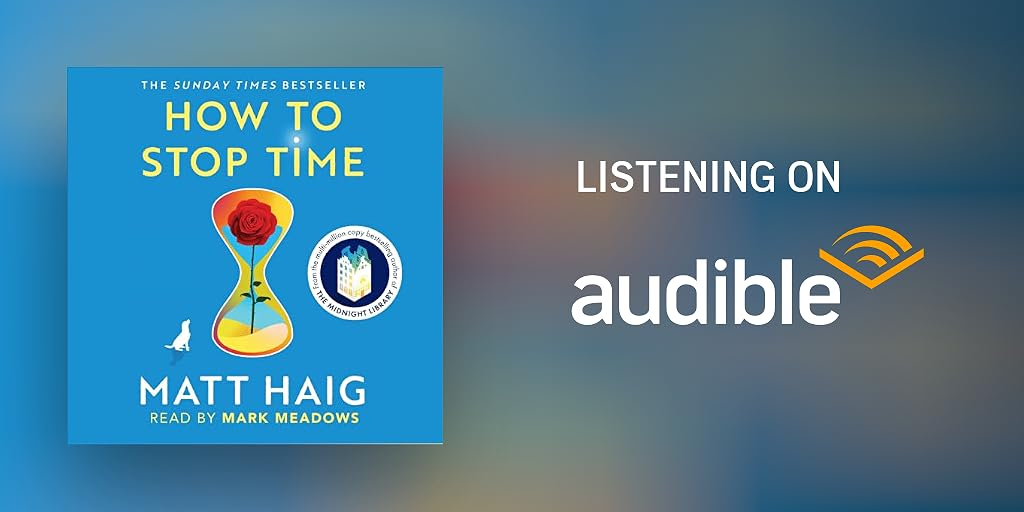
Libro: How to Stop Time

· One min read

How to Stop Time, by Matt Haig

How to stop time? Kiss.

How to travel in time? Read.

How to escape time? Music.

How to feel time? Write.

How to release time? Breathe.

alt text

Imagine being alive for over four hundred years, walking through history, and just wanting to live a normal, quiet life.

That is story of the book's main protagonist: Tom Hazard.

He has a rare condition that makes him age once every fifteen years, meaning he has technically lived since Elizabethan England.

The catch is the Alba Society, a secret group protecting his kind, which enforces a few strict rules:

  • Do not fall in love.
  • Do not build deep roots.
  • Move every eight years or risk exposure.

After going through the entire book, I've realized a couple of things.

We spend so much time worrying about the future or wishing we could change the past.

You end up realizing how easy it is to stay trapped behind your own history.

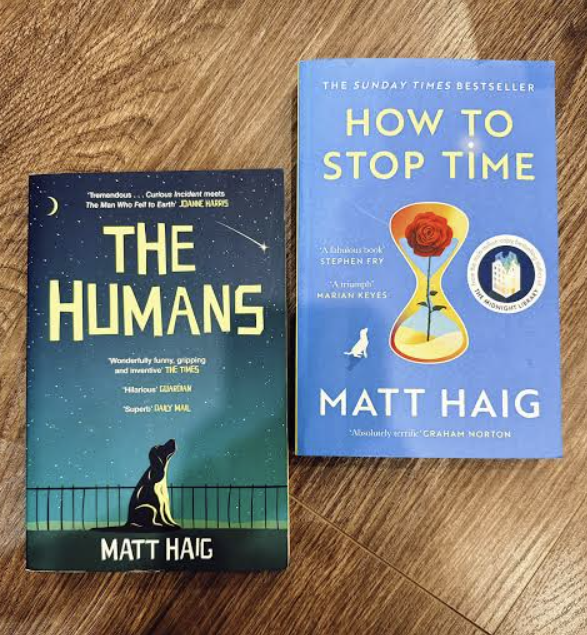
Libro: The Humans

· 2 min read

The Humans, by Matt Haig

“To be a human is to state the obvious. Repeatedly. Over and over, until the end of time.”

alt text

My personal takeaway:​

So much of what makes life actually worth living doesn't make a lick of logical sense.

And I think that's completely fine.

What does it actually mean to be human?​

If you look at us through the eyes of an alien, humanity is honestly kind of funny.

We spend half our lives wearing clothes we find uncomfortable, stressing out over money, and nodding politely while pretending we actually understand each other.

Oh, and having a profoundly unhealthy relationship with peanut butter (you need to read the book to get this, lols)

The Premise:​

Professor Andrew Martin figures out a massive mathematical breakthrough that humans apparently aren't supposed to unlock yet.

So, naturally, an interstellar visitor gets sent down to Earth to take his place, erase the evidence, and tie up any loose ends.

At first, he is completely repulsed by us.

Our bodies, our faces, our food, everything we do just seems utterly pointless to him.

Then he actually has to step into Andrew's shoes and live his life.

He meets Andrew's wife, Isobel.

Their son, Gulliver.

A dog named Newton.

Along the way, he stumbles into music, poetry, good food, real relationships, and all those tiny, mundane things that don't seem important at all until you meet someone who has never experienced them.

And that's where the book really became interesting to me.

The alien comes from a society that is light-years ahead of us technologically.

But the longer he stays here, the more he realizes that being human isn't about being efficient or superior.

We're messy.

We're irrational.

We get overly attached.

We worry over stupid stuff.

We manage to hurt each other even when we mean well.

Yet, even though we know people and things won't last forever, we still choose to care anyway.

Naturally, his mission gets a whole lot more complicated than he bargained for.


Oh, and if you've already read The Humans and liked it, you might want to check out some of Matt Haig's other stuff:

  • Reasons to Stay Alive
  • How to Stop Time

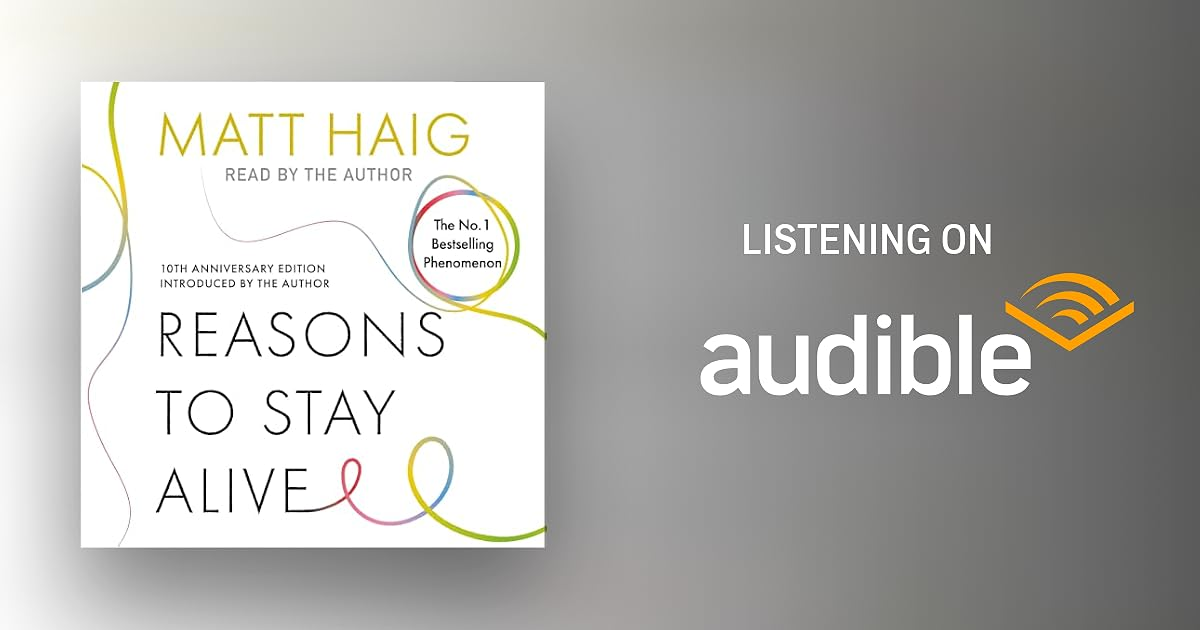
Libro: Reasons to Stay Alive

· 2 min read

Reasons to Stay Alive, by Matt Haig

“There is this idea that you either read to escape or you read to find yourself. I don't really see the difference. We find ourselves through the process of escaping.”

alt text

I didn’t expect to pick this one up right after a stack of non-fictional books. I think sometimes a book just finds you when you need it.


This book sounds a bit...about depression and anxiety, but without sounding like a clinical textbook. It reads more like someone who survived the storm and is sitting across a coffee table telling you what it felt like.

The first half dives straight into the heavy stuff. It covered panic attacks hitting out of nowhere and the exhaustion of pretending everything is fine. It talks about how depression lies to you, and makes you believe the pain is permanent and convinces you that nothing will ever feel light again.

Then the book shifts gears. It then turns into a practical, comforting list of things that kept him anchored:

  1. Reading books to escape his own head.
  2. Drinking coffee and walking outside.
  3. Remembering that time moves forward even when you feel frozen.

I think, it is not an exact magic fix with five-step rules. It is just a reminder that you do not have to figure out your entire life today.

You just have to survive today.

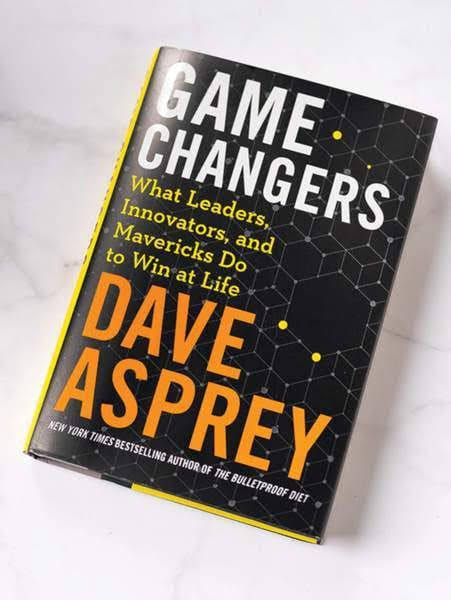
Libro: Gamechangers

· One min read

Game Changers, by Dave Asprey

Book 5 of 100

alt text

It’s good to be back.

“A flexible mind changes itself and builds a better model as it gathers more data about reality.”

A lot of the ideas in this book are already familiar.

Sleep better.

Eat better.

Move more.

Manage stress.

Take care of yourself.

Nothing exactly revolutionary there.

What I didn’t expect, though, was how much the book would keep circling back to something we often neglect when we’re trying to improve ourselves:

The body.

We spend so much time thinking about productivity, mindset, discipline, learning, and becoming better at what we do that it’s easy to forget the thing carrying us through all of it.

You can read all the books you want, build better habits, optimize your schedule, and push yourself harder.

But if your body is constantly tired, stressed, or running on empty, eventually everything else starts feeling harder too.

Maybe self-improvement doesn’t always begin with doing more.

Sometimes it starts with taking better care of what’s already there.

So yeah.

A sound mind, a sound body.

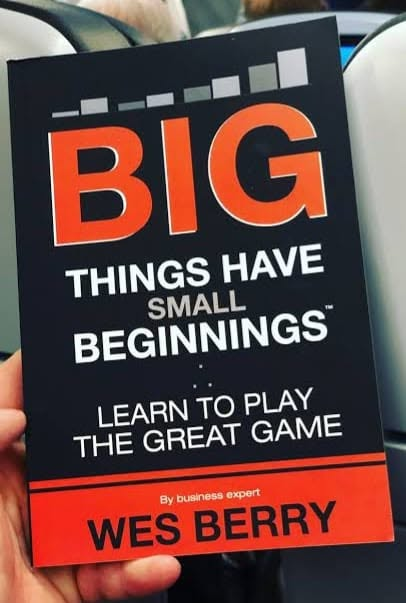
Libro: Big Things Have Small Beginnings

· One min read

Big Things Have Small Beginnings: Learn to Play the Great Game, by Wes Berry

Book 5 of 100

alt text

“Ambitious people become dangerous if they get their ambitions checked, and not the other way around; if they are left to roam free, they become productive and useful.”

The title pretty much says it all.

Big things usually don’t start big.

They start with small decisions, small risks, small improvements, and a lot of ordinary work that doesn’t look impressive while you’re doing it.

That’s probably the part we forget.

We tend to notice the result once it becomes visible, but not the countless little things that had to happen before it got there.

And ambition works the same way.

Wanting something bigger for yourself isn’t necessarily a bad thing. What matters is what you do with that ambition.

You can let it turn into frustration when things don’t move fast enough.

Or you can put it to work.

Learn.

Build.

Try.

Fail.

Adjust.

Then keep going.

As they say, take care of the small things and the big things have a way of taking care of themselves.

So, are you ambitious enough?

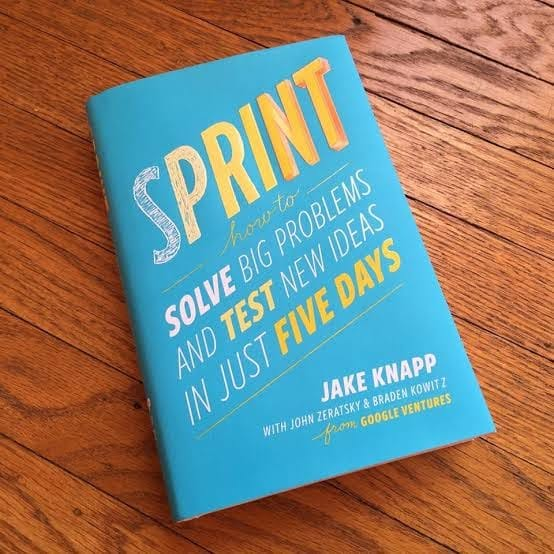
Libro: Sprint - How to Solve Big Problems

· One min read

Sprint: How to Solve Big Problems and Test New Ideas in Just Five Days, by Jake Knapp, John Zeratsky, and Braden Kowitz

Book 4 of 100

“One part is mindset, the second half is method.”

alt text

This one packs a lot into a pretty simple idea:

You don’t always need months of meetings, planning, and endless discussion before finding out whether an idea actually works.

Sometimes you just need a focused process, a small team, a clear problem, and a way to test something quickly.

A lot of the concepts felt familiar, especially if you’ve already been exposed to process improvement, design thinking, Lean, Agile, or Scrum.

So I wouldn’t say every idea here feels completely new.

But that’s not really a bad thing.

What Sprint does well is bring many of those ideas together into a practical framework. Instead of spending too much time debating what might work, you build something, put it in front of people, gather feedback, and learn from what actually happens.

Less guessing.

More testing.

Less talking about the perfect solution.

More finding out whether the damn thing works.

Definitely a good supplemental read for anyone exploring Lean, Agile, Scrum, or design thinking.

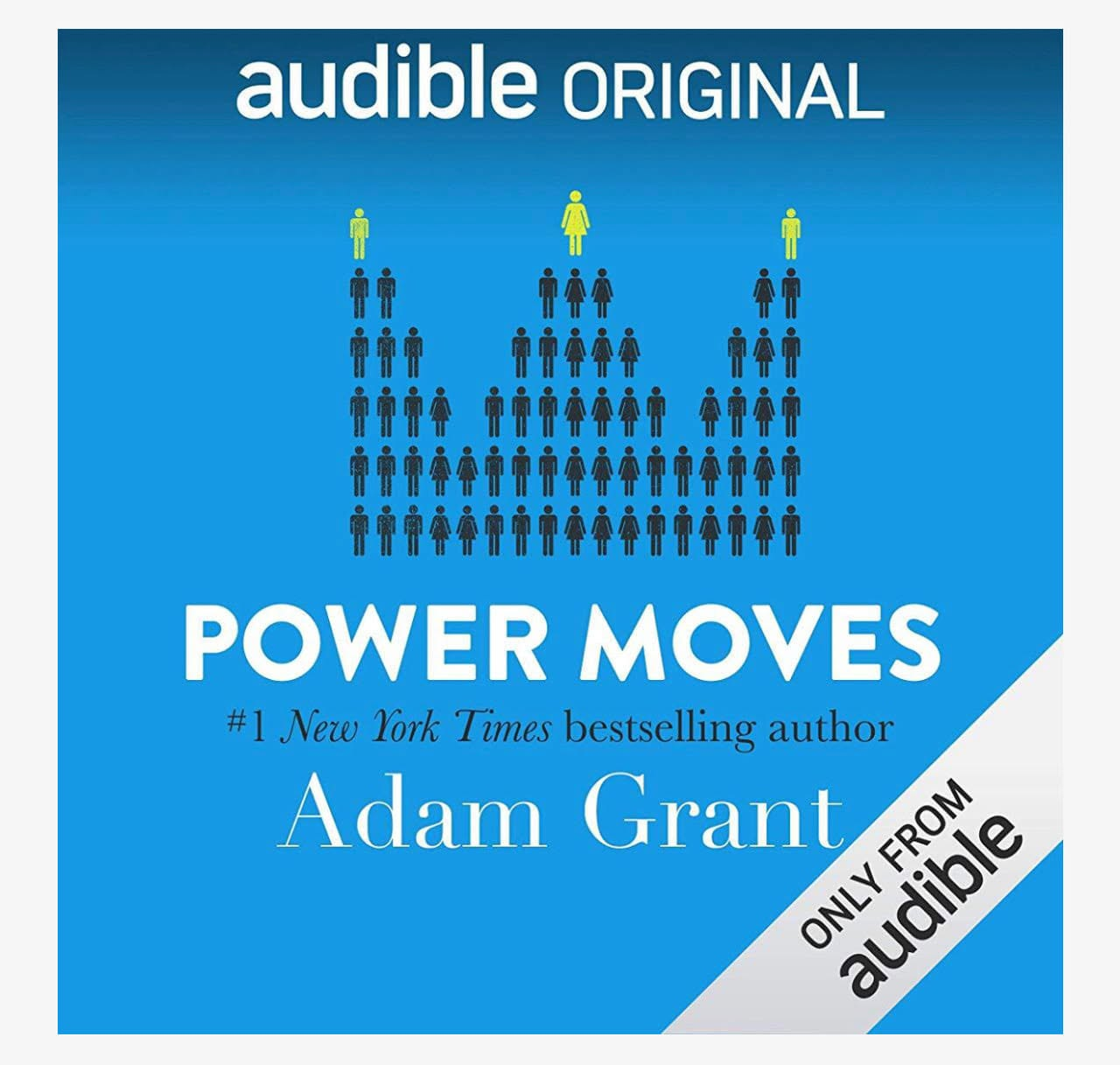
Libro: Power Moves from Davos

· One min read

Power Moves from Davos, by Adam Grant

Book 3 of 100

Good leaders tend to fall into one of these categories:

The Dominant. The Friendly. The Achievement-oriented.

alt text

A lot of interesting ideas about leadership packed into this one.

What stood out to me most is that these labels are never really absolute.

People don’t fit neatly into one box.

A leader can be dominant when a difficult decision has to be made, friendly when the team needs support, and achievement-oriented when everyone needs a push toward a bigger goal.

And if we’re lucky enough, at some point in our careers we get to work under someone who knows when to shift between those different styles.

Maybe that’s what good leadership really looks like.

Not choosing one personality and sticking with it forever, but understanding the people around you, reading the situation, and knowing when to lead differently.

Because sometimes people need direction.

Sometimes they need encouragement.

And sometimes they just need someone who believes they can do better.

So, where do you think you fall on that leadership spectrum?

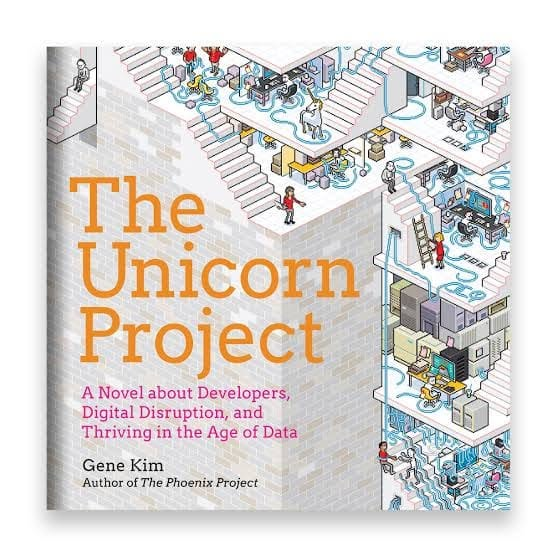
Libro: The Unicorn Project

· 2 min read

The Unicorn Project, by Gene Kim

Book 2 of 100

“It’s not the upfront capital that kills you, it’s the operations and maintenance on the back end.”

alt text

I started out closer to Ops, spent time learning what happens behind the scenes, and eventually moved into installation and implementation.

I guess one of the best things about getting exposed to different parts of a tech environment is that you slowly start to understand how much each role depends on the others.

Developers build.

Operations keeps things running.

Infrastructure provides the foundation.

Support handles the problems that somehow still make it through.

And somewhere in between, all of those people have to figure out how to work together.

It doesn’t always fit perfectly.

Processes clash.

Priorities differ.

One team’s improvement can easily become another team’s problem.

But somehow, all those imperfect pieces still have to fit into the same puzzle.

And I think that’s what I enjoyed most about The Unicorn Project. It gives you another perspective on how software, systems, people, and processes all affect each other.

For developers: The Unicorn Project.

For network and systems engineers: The Phoenix Project.

Different sides of the same machine.

Now, looking forward to finally getting my hands on The DevOps Handbook.

Libro: The Laws of Human Nature

· One min read

The Laws of Human Nature, by Robert Greene

Book 46 of 100

“Man will only become better when you make him see what he is like.”

alt text

Last read for 2019.

I actually finished this during the final week of December, after what felt like almost three months of on-and-off reading before finally reaching the last chapter.

It’s a long read, but I guess that fits the subject.

Trying to understand people, their motives, their insecurities, their habits, and the way they react to the world isn’t exactly something you can summarize in a few pages.

And maybe one of the harder parts is realizing that a lot of those observations also apply to yourself.

It’s easy to analyze other people.

It’s much harder to notice your own patterns, admit when you’re wrong, and recognize the things you keep doing without really knowing why.

I didn’t reach my reading target for the year, but that’s alright.

There’s always another year to try again.

So, closing the books on last year and opening a few new chapters for this one.

Libro: Atomic Habits

· One min read

Book 45 of 100

“Goals don’t differentiate people because, as you can see, winners and losers often have the same goals. The real question is: who will push through and rise to the occasion?”

alt text

I actually finished this last October, but with everything that happened during the last two months of 2019, I only managed to reach half of my target of 100 books for the year.

Still, it feels good to be back.

Time to plant some new seeds of habit for 2020.

“When you can’t win by being better, win by being different.”

Libro: How to Win Friends and Influence People

· 2 min read

How to Win Friends and Influence People, by Dale Carnegie

Book 41 of 100

alt text

Here’s the uncomfortable part about a lot of self-help books that promise to help people become more persuasive, more confident, or better at winning people over:

Sometimes the line between influencing people and using people can get pretty thin.

That was probably my biggest thought while going through this one.

There are definitely a lot of useful ideas between the covers, especially around listening, showing genuine interest, avoiding unnecessary arguments, and understanding how people want to be treated.

But a lot of the examples also felt heavily influenced by sales, negotiation, and the idea of getting people to say yes.

And that’s where it gets interesting.

The same skill can be used to build better relationships or simply to get something from someone.

I guess the difference comes down to intent.

Are you trying to understand people better?

Or are you just trying to figure out which buttons to press?

Still, it’s hard to ignore how influential this book has been.

A lot of modern books on sales, communication, persuasion, and leadership seem to trace at least some of their ideas back to Carnegie.

So while I didn’t agree with everything, I can still see why this one became a classic.

Maybe not a perfect guide to human relationships.

But definitely one of the foundations of modern books about influence.

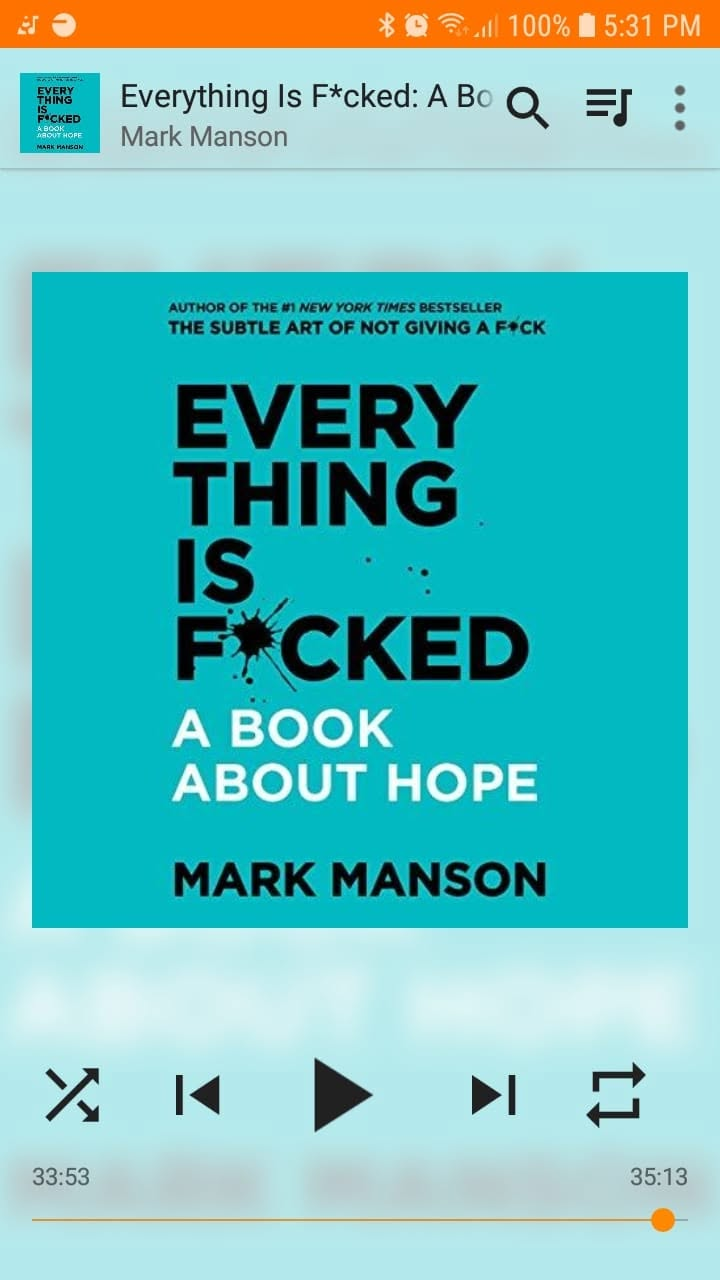
Libro: Everything Is F*cked

· 2 min read

Everything Is Fcked: A Book About Hope*, by Mark Manson

Book 40 of 100

alt text

“Early in life, we are driven to explore the world around us, to know what is worth pursuing further and what is worth avoiding.

The exploratory phase eventually exhausts itself and not because we ran out of world to explore.

Or maybe, it’s the opposite.

The exploratory phase wraps up because as we become older, we begin to recognize that there’s too much world to explore. You can’t touch and taste everything. You can’t meet all the people.”

If there’s one thing I can say about Manson, it’s that he has a pretty good way of capturing human psychology while still sounding like someone who would rather tell you the uncomfortable truth than dress it up nicely.

There’s a lot packed into this one.

Why people behave the way they do.

Why emotions often beat logic.

Why we keep repeating the same mistakes even when we already know better.

How our actions eventually turn into consequences, whether we like them or not.

And, of course, hope.

That last part is probably what I found most interesting.

For a book with “hope” in the title, it doesn’t exactly hand you a warm, comforting answer by the end.

If anything, I felt a little left to dry by the open-endedness of it.

But maybe that fits the point.

Hope isn’t always about convincing yourself that everything will turn out fine.

Sometimes it’s about accepting that things can be messy, uncertain, even completely fucked, and still deciding that there’s something worth doing next.

If you haven’t read Manson before, I’d start with The Subtle Art of Not Giving a F*cked.

Then read this one.

It feels like the natural next step.

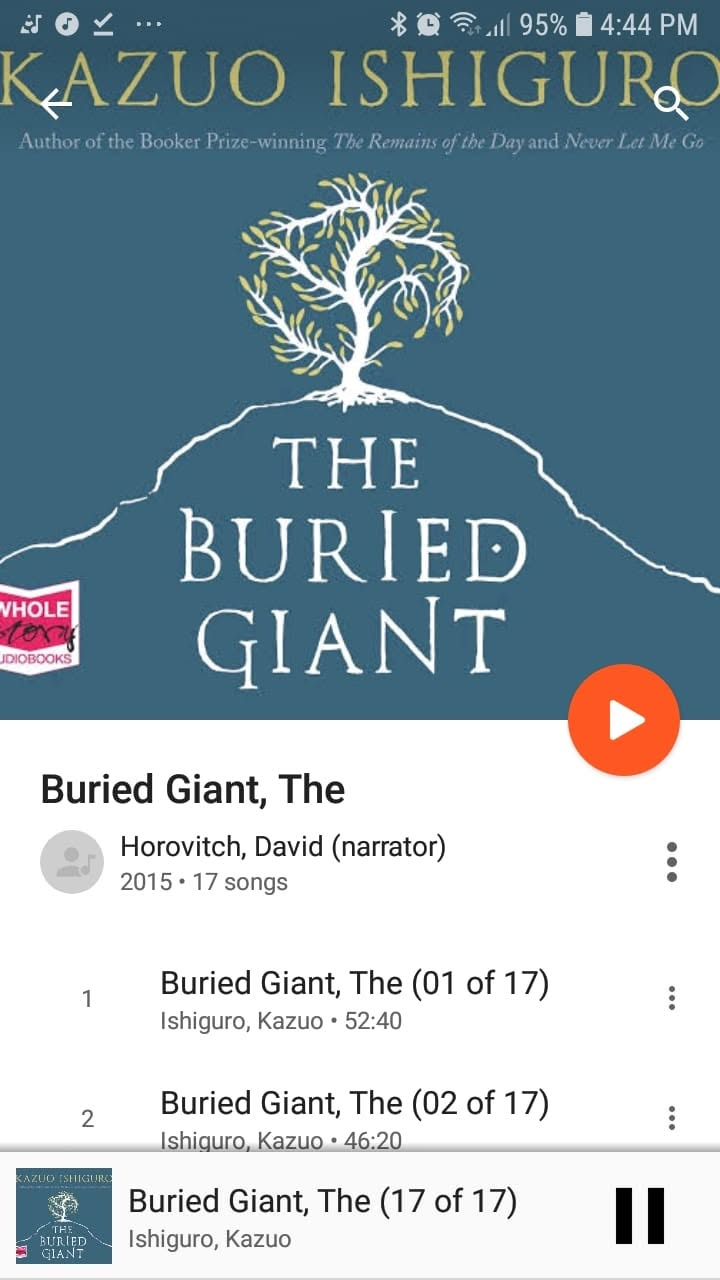
Libro: The Buried Giant

· 2 min read

The Buried Giant, by Kazuo Ishiguro

Book 38 of 100

alt text

“Some of you will have fine monuments by which the living may remember the evil done to you. Some of you will have only crude wooden crosses or painted rocks, while yet others of you must remain hidden in the shadows of history.”

Until the very end, I kept thinking there had to be some kind of time loop.

Honestly, I was expecting one.

The whole story has this strange feeling of memory slipping away, of people trying to hold on to fragments of the past while never being completely sure if those fragments are even true.

And that left me wondering:

Were there really secrets buried in the past, or were some of them only memories people had convinced themselves were real?

That’s probably what stayed with me most.

The book seems less interested in giving clear answers and more interested in asking what happens when people remember too much, or forget too much.

Maybe forgetting can protect us.

Maybe remembering can hurt us.

Maybe both are necessary.

There may be symbolism buried everywhere in this book.

Or maybe there isn’t.

Either way, interpret it as you will.

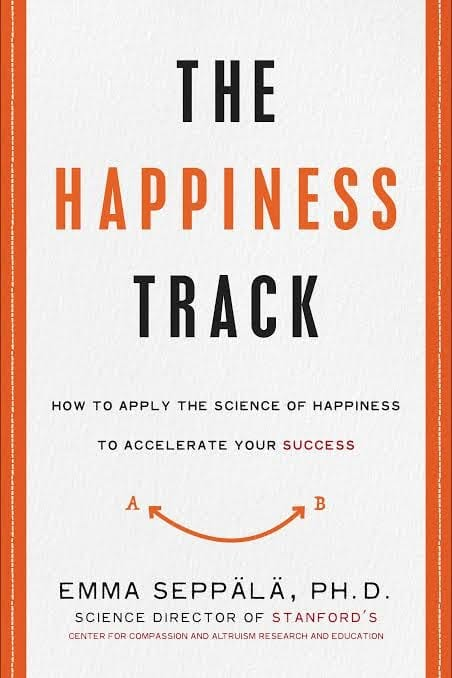
Libro: The Happiness Track

· One min read

The Happiness Track, by Emma Seppälä

Book 37 of 100

“Happiness tends to spread up to 3 degrees of separation from you, to those close to you, and even to strangers you will never know.”

alt text

Another August read down.

Honestly, this one didn’t really work for me.

There were still a few useful ideas in it, especially around being more compassionate toward yourself and other people, slowing down, and not treating productivity like some never-ending race.

Those parts were fine.

But the more I went through it, the more I felt like some of the points were either contradicting each other or simply repeating ideas I had already come across in other psychology and self-help books.

At times, it felt less like one strong argument and more like a collection of familiar concepts stitched together and supported by different studies and articles.

Maybe that’s useful if you’re encountering these ideas for the first time.

For me, though, it just didn’t feel particularly fresh.

So yeah.

Another not-so-good read added to the list.

Can’t love every book, I guess.

Anyway, still a good weekend, and hopefully a better week ahead.

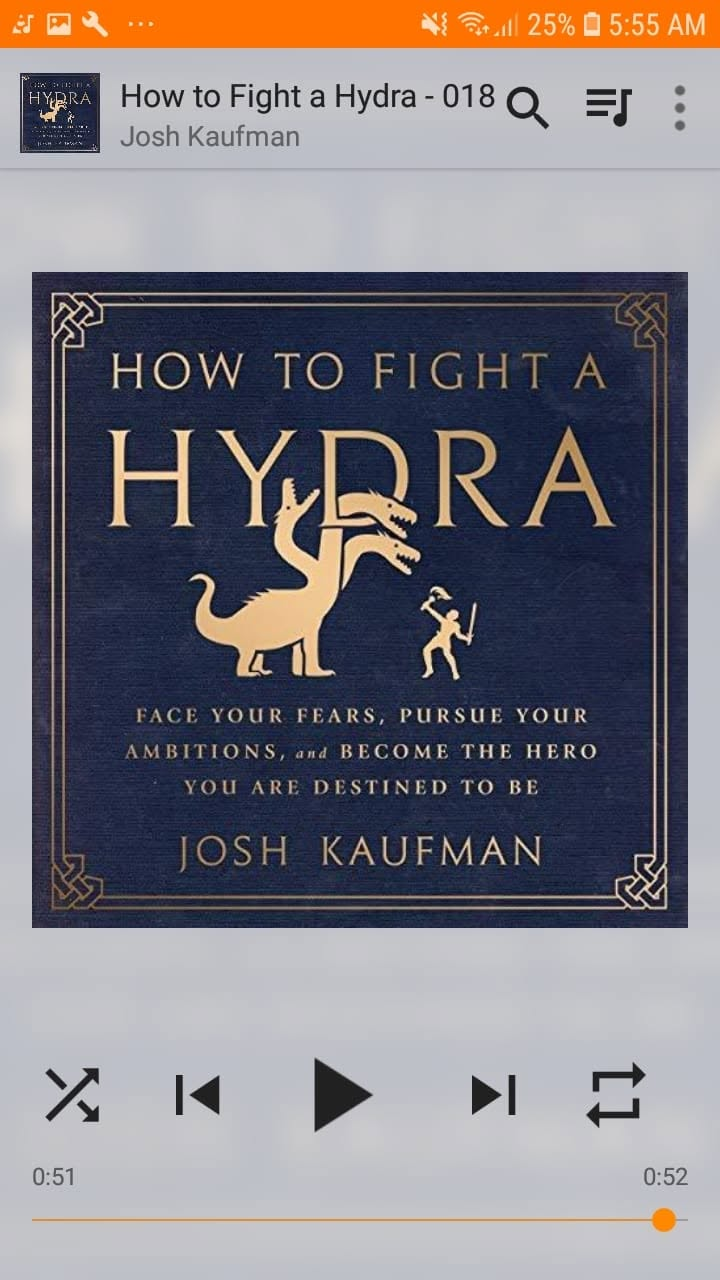
Libro: How to Fight a Hydra

· One min read

How to Fight a Hydra, by Josh Kaufman

Book 36 of 100

“When I let go of what I am, I become what I might be.”

alt text

Quite a short read, and really more of a metaphor for the different complexities we face in life.

It’s light, simple, and easy to finish in one sitting.

Not exactly the kind of self-help book that tries to overwhelm you with frameworks or endless advice. It reads more like a bedtime story with a lesson hidden underneath.

And maybe that’s why it works.

The Hydra becomes whatever difficult thing is standing in front of you.

A risk.

A problem.

A decision you’ve been avoiding.

Something that looks too big, too uncertain, or too uncomfortable to face.

The main idea is simple:

Take the risk.

Face the thing.

See what happens.

Because sometimes greatness doesn’t come from waiting until you feel completely ready.

Sometimes it starts with deciding to move anyway. 🚀

And as the last page closes, the book leaves you with one question:

What Hydra are you facing today?

Libro: We'll Always Have Paris

· One min read

We'll Always Have Paris, by Ray Bradbury

Book 44 of 100

“These stories were created by two people: the me who watches and the me who writes. Both of them have lived under one sign: DON’T THINK. DO.”

alt text

There’s something about Bradbury’s writing that feels observant without trying too hard to explain everything.

You get these small moments, strange encounters, bits of memory, and quiet human details that somehow become stories simply because someone paid attention to them long enough.

Maybe that’s one of the lessons here.

Watch closely.

Notice things.

Write them down.

Don’t overthink every idea until there’s nothing left of it.

Sometimes the best thing you can do is just start.

Let the story figure itself out along the way.

So yeah.

Don’t think. Do.

Libro: Bradbury Stories: 100 of His Most Celebrated Tales

· One min read

Bradbury Stories: 100 of His Most Celebrated Tales, by Ray Bradbury

Book 43 of 100

“The world is full of statues.”

alt text

A light dive into the mind of a master storyteller.

What I liked about this collection is how easily Bradbury moves from the ordinary to the strange.

One story can feel nostalgic and familiar, then the next one suddenly throws you into something eerie, surreal, or completely unexpected.

And somehow, even the weirdest stories still feel human.

Fear.

Memory.

Curiosity.

Regret.

Hope.

The kind of things that keep showing up no matter how strange the setting gets.

Reading through a collection this big also makes you notice how much of storytelling is simply about paying attention.

A place.

A person.

A small detail.

An odd thought.

Then asking: What if?

Sometimes that’s all a story needs to begin.

A good reminder that imagination doesn’t always come from looking somewhere far away.

Sometimes you just need to look harder at what’s already around you.

Libro: When Breath Becomes Air

· 2 min read

When Breath Becomes Air, by Paul Kalanithi

Book 33 of 100

“We are never so wise as when we live in the moment.”

alt text

This is the kind of book that grips you quietly and doesn’t really let go until the last page.

What stayed with me most was the shift in perspective.

From medicine as something procedural, clinical, and structured, to suddenly being on the receiving end of it.

From being the physician making decisions to becoming the patient depending on those same decisions.

That change alone gives the book a different kind of weight.

It’s one thing to understand illness through charts, scans, diagnoses, and treatment plans.

It’s another thing entirely when the person being discussed is you.

There are a lot of lessons packed into this one about work, purpose, mortality, family, and what it means to live when time suddenly becomes uncertain.

But one thought stood out to me the most:

“We might not always be able to understand what everyone goes through, but we can set aside the time to listen to their story and hopefully give them respect as a human being, in life or death.”

Maybe we won’t always know the right thing to say.

Maybe we won’t fully understand what another person is carrying.

But sometimes listening is already a form of kindness.

And sometimes respect begins simply by remembering that behind every diagnosis, every chart, every problem, and every difficult moment, there is still a person.

Libro: The War of Worlds

· One min read

The War of the Worlds, by H.G. Wells

Book 31 of 100

alt text

After a series of events, I finally managed to get back to my reads.

For June, I went through the original science-fiction classic that later inspired several adaptations, including Spielberg’s film.

It’s always interesting going back to the source material after already knowing the story through a movie.

You recognize the major ideas, the invasion, the panic, the helplessness, but the book gives everything a different atmosphere.

There’s something more unsettling about watching ordinary people slowly realize that the world they understand no longer works the way they thought it did.

And considering how old the novel is, it still holds up surprisingly well.

Anyway, this one felt like a good way to get the reading gears moving again.

Time to rewire everything, get back into rhythm, and resume the usual course.

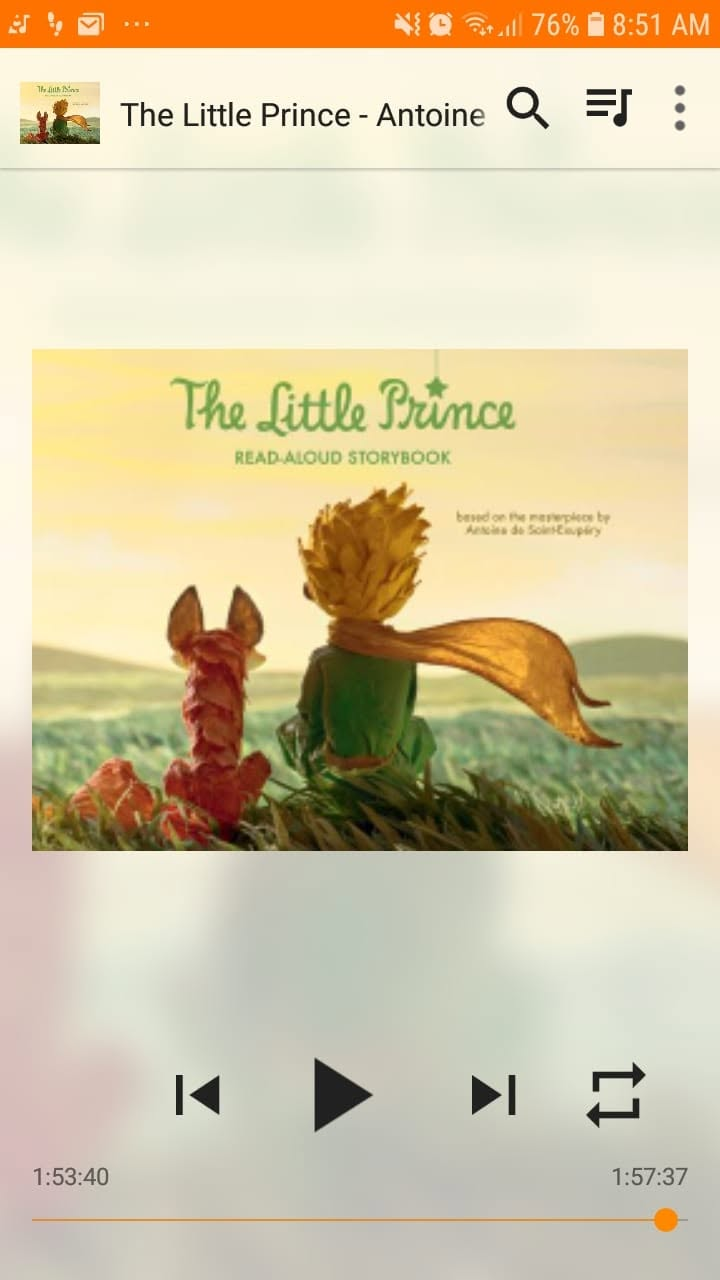
Libro: The Little Prince

· One min read

Le Petit Prince, by Antoine de Saint-Exupéry

Book 29 of 100

“All grown-ups were once children... but only few of them remember it.”

alt text

Such a simple story, yet somehow it manages to say a lot about growing up, friendship, love, loneliness, and the things we slowly stop noticing as we get older.

Maybe that’s what makes Le Petit Prince work so well.

It looks like a children’s book, but a lot of its lessons probably make more sense once you’re no longer a child.

Somewhere along the way, we become too busy with numbers, responsibilities, plans, and everything we think matters.

Then a little prince comes along and reminds us that maybe we’ve forgotten how to look at things properly.

Sometimes growing up isn’t about leaving childhood behind.

Maybe it’s about remembering which parts of it were worth keeping.

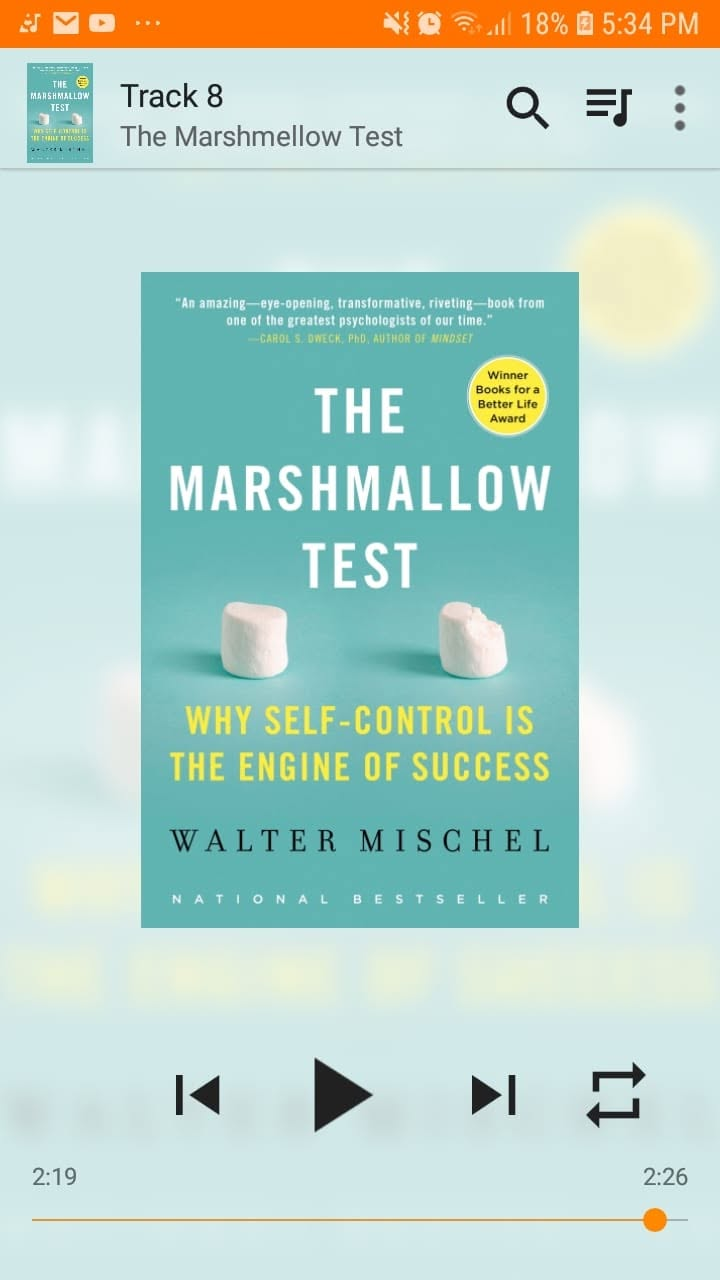
Libro: The Marshmallow Test

· One min read

The Marshmallow Test: Mastering Self-Control, by Walter Mischel

Book 28 of 100

“We do not come into the world with a bundle of fixed, stable traits that determine who we become. We develop in continuous interactions with people and experience.”

alt text

The idea behind this one is genuinely interesting.

How much does self-control at a young age influence the kind of person we eventually become?

How much of it is something we’re born with, and how much can actually be shaped by experience, environment, and the people around us?

There are definitely some useful insights here, especially around delayed gratification, willpower, and the idea that self-control is not necessarily a fixed trait.

That said, I felt like the main ideas were buried under a little too much psychobabble.

There were moments when I thought:

Okay, I get the point. Can we move on now?

So yeah.

Good read, interesting concept, but definitely a bit of a struggle to finish.

When it comes to willpower, habits, and changing behavior, I’d still personally go with Charles Duhigg’s The Power of Habit.

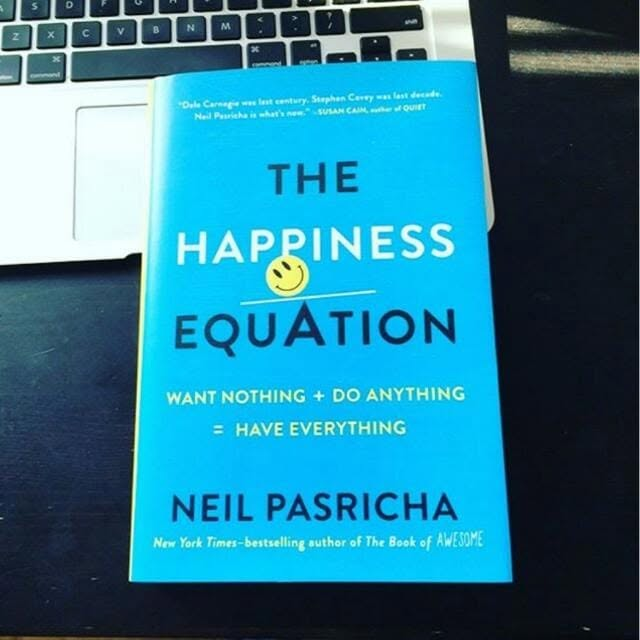
Libro: The Happiness Equation

· 2 min read

The Happiness Equation, by Neil Pasricha

Book 27 of 100

“Nobody knows what they want to do with their entire life. Nobody. Nobody is born with a single unifying sense of purpose that they strive to work forever.

alt text

Having one giant purpose that you strive to work forever isn’t the goal.

What is?

An ikigai.”

A reason to get up in the morning.

I like that idea.

We spend so much of our lives being asked what we want to become, what career we want, where we see ourselves ten years from now, and eventually, when we plan to retire.

As if life is supposed to follow one narrow road with a clearly marked finish line.

Study.

Find work.

Get good at it.

Save.

Invest.

Retire.

Then finally enjoy life.

But what happens after that?

One of the more interesting ideas in this book is that maybe we put too much emphasis on retirement as the ultimate destination. We spend decades imagining the day when we can finally stop working, without thinking enough about what will actually make us want to get out of bed once that day comes.

That’s where ikigai comes in.

It doesn’t necessarily have to be some enormous life purpose.

It can change.

It can be your work today, a project tomorrow, your family, something you want to build, something you want to learn, or simply something that makes you look forward to another morning.

And maybe that’s a healthier way to look at life.

Prepare for your future, definitely.

Save. Invest. Build enough freedom for the version of yourself that comes later.

But don’t spend your entire present waiting for some imaginary finish line before giving yourself permission to enjoy living.

There is no single destination that all of us are supposed to reach.

There isn’t one narrow street.

You can spend your life waiting for retirement so you can finally do the things you enjoy.

Or you can wake up every morning and keep finding reasons to enjoy the life you’re already living.

Lastly, you don’t live only once.

You die only once.

You live every day.

So when you get out of bed tomorrow morning, maybe ask yourself:

What’s my ikigai?

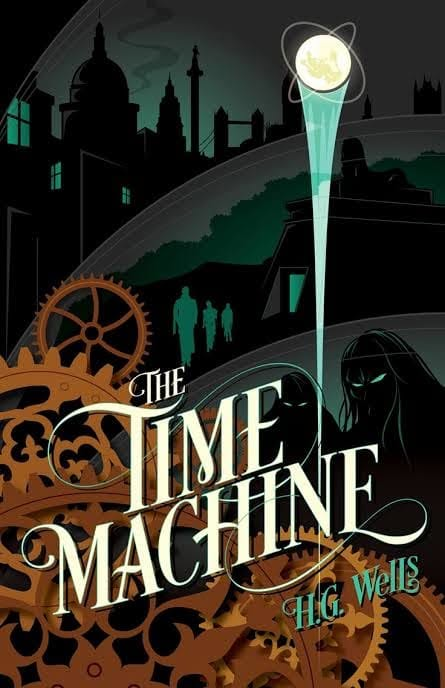
Libro: The Time Machine

· One min read

The Time Machine, by H.G. Wells

Book 26 of 100

“Face this world. Learn its ways, watch it, be careful of too hasty guesses at its meaning. In the end you will find clues to it all.”

alt text

Observe and learn.

That’s probably the simplest takeaway I got from this one.

At first, things may seem disconnected. You see something happen, form an explanation, and convince yourself that you already understand what’s going on.

Then another detail appears and suddenly your first assumption doesn’t make as much sense anymore.

I guess that’s true outside fiction too.

We’re often too quick to assign meaning to things we barely understand.

A person.

A situation.

A failure.

A strange turn of events.

Sometimes the better thing to do is simply watch a little longer.

Gather more clues.

Question your first conclusion.

And learn as the bigger picture slowly reveals itself.

Not everything makes sense immediately.

But there are usually clues.

Find them.

Learn from them.

Libro: The Smartest Kids in the World

· 2 min read

The Smartest Kids in the World, by Amanda Ripley

Book 25 of 100

“It was relentless and excessive, yes, but it also felt more honest.

alt text

Kids in hamster-wheel countries knew what it felt like to grapple with complex ideas and think outside their comfort zone. They understood the value of persistence. They knew what it felt like to fail, work harder, and do better. They were prepared for the modern world.”

For educators and teachers, the question becomes: How do you provide a world-class education?

And for parents: How do you find one?

But I guess my biggest takeaway from this book is much simpler:

Education doesn’t start inside classrooms. Education starts at home.

Schools obviously matter.

Teachers matter.

Curriculum, resources, expectations, and the environment students grow up in all matter too.

But long before a child sits inside a classroom, there are already lessons being taught at home.

How failure is handled.

How curiosity is encouraged.

Whether questions are welcomed.

Whether effort matters more than simply getting the right answer.

And maybe that foundation shapes how a student eventually approaches learning everywhere else.

I wouldn’t call this a definitive guide for parents or educators.

But it does give an interesting glimpse into how students from different parts of the world are challenged, how they fail, how they recover, and what their education systems expect from them.

Different countries.

Different classrooms.

Different approaches.

But the same basic question: How do we help people learn how to learn?

Libro: Daring Greatly

· 2 min read

Daring Greatly, by Brené Brown

Book 24 of 100

“It is not the critic who counts; not the man who points out how the strong man stumbles, or where the doer of deeds could have done them better.

The credit belongs to the man who is actually in the arena, whose face is marred by dust and sweat and blood... who at the best knows in the end the triumph of high achievement, and who at the worst, if he fails, at least fails while daring greatly.”

Theodore Roosevelt, The Man in the Arena

alt text

I think that quote already captures much of what this book is trying to say.

It’s easy to stand outside the arena and point out what someone could have done better.

It’s much harder to actually step inside, take the risk, expose yourself to failure, criticism, embarrassment, and uncertainty, and still choose to show up.

That’s probably what I liked most about Daring Greatly.

Vulnerability isn’t necessarily weakness.

Sometimes it’s simply the price of trying something that actually matters.

You might fail.

You might look stupid.

You might get criticized by people who never even tried.

But at least you were there.

In the arena.

As for the reading challenge, I’ve been caught up with a lot during the past two months. I still managed to squeeze in some audiobooks here and there, though with much less time than before.

Still a long way to go.

But I’ll keep trying to reach that 100th mark before December.

Libro: Made to Stick

· One min read

Made to Stick, by Chip Heath and Dan Heath

Book 23 of 100

“Simple. Unexpected. Concrete. Credible. Emotional. Stories.”

alt text

A pretty neat framework for understanding why some ideas stay with us while others disappear almost immediately.

Ironically, though, I can think of a few other books that probably stuck with me more than this one.

Still, there are some useful ideas here, especially if you’re interested in how to make a message clearer, more memorable, and easier for other people to care about.

Sometimes it’s not enough to simply have a good idea.

You also have to know how to present it.

Strip away the unnecessary parts.

Break the expected pattern.

Make it concrete.

Give people something they can trust.

Make them feel something.

And when possible, tell a story.

If you’re interested in how ideas move from conception to actual lift-off, this is a good place to start.

Libro: Option B

· 3 min read

Option B, by Sheryl Sandberg and Adam Grant

Book 22 of 100

“Life can only be understood looking backward, but it’s meant to be lived by moving forward.”

alt text

The loss of a loved one is life-altering.

And this book shows how tragedy doesn’t end with the person who leaves. In many ways, the weight of it continues with the people who remain.

Grief changes routines.

Relationships.

Plans.

Even the way you imagine the future.

A few ideas from this one really stayed with me:

  1. Couples grow through dependence, but individuality still matters.

It’s natural to rely on each other.

That’s part of being partners.

But I think there’s also value in making sure that both people continue to grow as individuals, with their own confidence, skills, relationships, and ability to make decisions.

Being together shouldn’t mean becoming incapable of standing on your own.


  1. Help each other grow without solving everything for each other.

This one can sound a little harsh at first.

But I don’t think the idea is to watch your partner struggle from a distance.

It’s more about knowing when to help and when to give them enough space to figure things out themselves.

Sometimes support means stepping in.

Sometimes support means saying:

I know you can handle this, and I’m right here if you need me.

Maybe that’s how two people grow individually while still growing together.


  1. Prepare for the things nobody wants to think about.

Insurance isn’t exactly the most exciting thing to talk about.

But one practical lesson from a book about loss is that tragedy doesn’t care whether your finances are ready.

The point of insurance, at its simplest, is transferring some of that financial risk so the people you leave behind don’t have to carry every burden on top of everything else they’re already dealing with.

You won’t be around to enjoy the payout anyway.

The people you care about will.

That alone is probably worth thinking about.


Overall, Option B is really about what happens when Option A is no longer available.

You don’t necessarily get over something.

Sometimes you simply learn how to live around the space it left behind.

Ayt.

Already heading into the second quarter of the year and I’m still only around a quarter of the way toward my reading target.

Still aiming for 100 reads by year-end, along with two more BHAGs for the year.

Come rain or shine.

Libro: Fail Fast, Fail Often

· One min read

Fail Fast, Fail Often, by Ryan Babineaux

Book 21 of 100

“Do it badly as fast as you can.”

alt text

Interesting read, although I’d say the title is a little misleading.

I went into this expecting something more focused on failure itself, how to recover from it, learn quickly, and keep moving.

Instead, the book revolves around one central idea but branches out into a lot of other areas of self-development.

Try things.

Stop waiting until you feel completely ready.

Experiment.

Be willing to look stupid.

And most importantly, don’t spend so much time preparing for something that you never actually start.

That part I liked.

Sometimes doing something badly is still better than spending months trying to figure out the perfect way to begin.

You learn more from actually doing the thing.

Still, the book felt a little scattered for me.

It's like Seth Godin’s style.

There are plenty of good ideas and quotable lines, but they sometimes feel like thoughts that would work better as individual blog posts than as one whole book.

So yeah.

Not bad.

Not particularly memorable either.

Just another ordinary read with a few good reminders hidden between the pages.

Libro: The Storyteller's Secret

· One min read

The Storyteller’s Secret, by Carmine Gallo

Book 20 of 100

“In the end, you’re never going to be certain that you’re on the right path. You just have to listen to the call and trust that it will all work out.

alt text

The path isn’t clearly laid out.

You’ll be guided, but if you don’t start walking, you won’t get anywhere.

Start walking even if you don’t know where the path will lead you.”

What I liked about this one is how it reminds you that people rarely remember information just because it was presented clearly.

They remember how it made them feel.

They remember the person behind it.

They remember the story.

That’s probably why the best speakers, leaders, teachers, and even brands don’t just throw facts at people.

They give those facts a shape.

A beginning.

A struggle.

A reason to care.

And sometimes, that’s enough to turn an ordinary message into something that actually sticks.

Inform. Illuminate. Inspire.

And if something you’ve learned can help someone else, pass it on.

Share the lesson.

Share the failure.

Share the story.

Pay it forward.

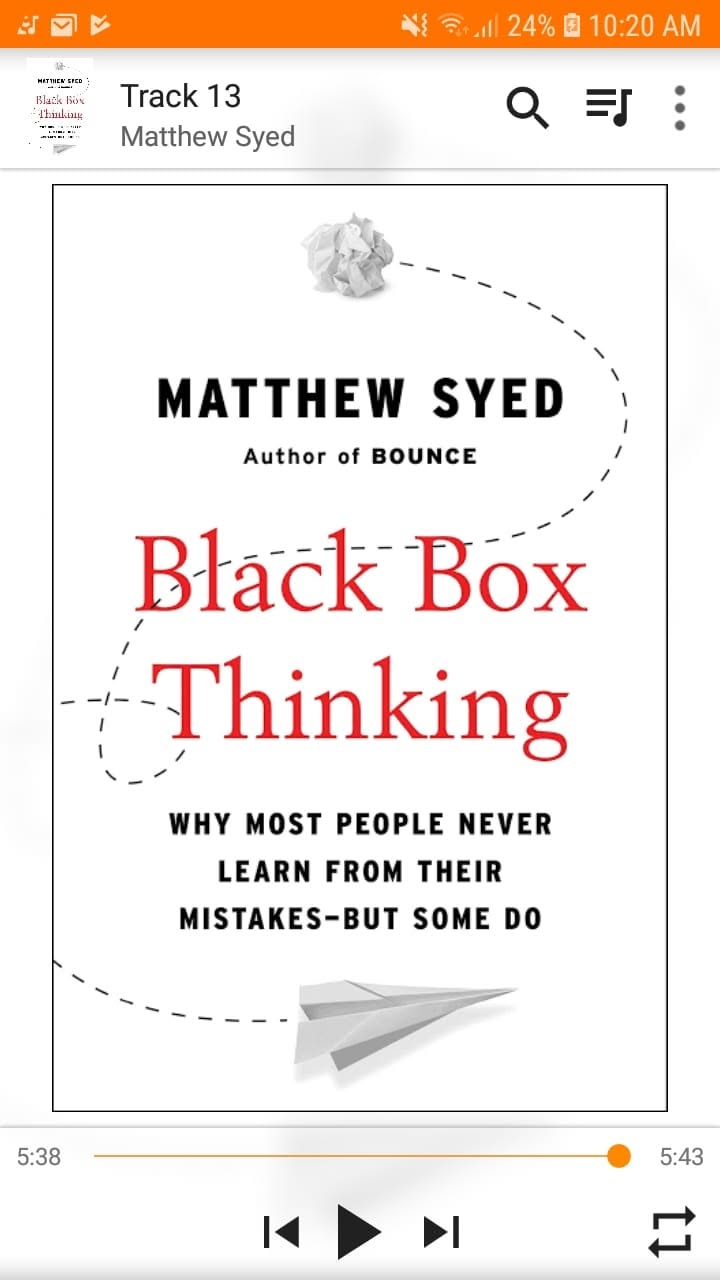
Libro: The Black Box of Thinking

· 2 min read

The Black Box of Thinking by Matthew Syed

Book 19 of 100.

alt text

Main Takeaways:

  1. It’s very easy to sit back and come up with grand theories about how to change the world, but more often than not, our intuitions are wrong.

  2. Most of the time, we’re so worried about messing up that we never even get onto the field and try.

  3. Ultimately, we have to remember that success is only the tip of the iceberg. Beneath the surface, outside our view and often outside our awareness, is a mountain of necessary failures that came before it.

I know there are a lot more ideas laid out in the case studies throughout this book, but these three were the ones that really stuck with me.

They were also the only ones I actually managed to write down while listening halfway through. Haha.

As the book puts it, the world is far too complex to be figured out from your armchair.

Go out.

Test your ideas.

Be wrong. Learn. Fail again. Try again.

And maybe, after you’ve tried everything humanly possible, there comes a point when you can finally say:

“This time, I know it’s right.”

So yeah.

Learn from your own mistakes, but learn from other people’s mistakes too.

As Levenson puts it:

“Learn from the mistakes of others. You can’t possibly live long enough to make them all yourself.”

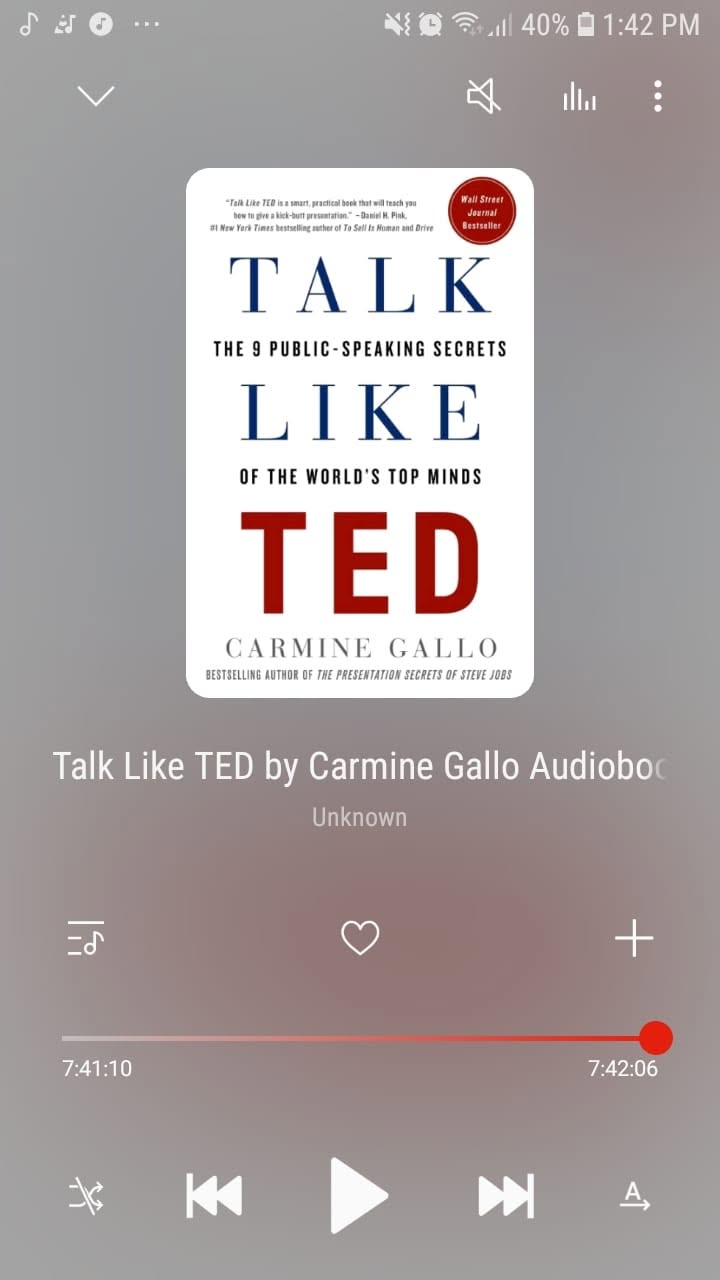
Libro: Talk Like TED

· One min read

Talk Like TED, by Carmine Gallo

Book 18 of 100

“Speak like you’re sharing a secret.”

alt text

For communicators, speakers, and storytellers, this one is worth checking out.

If you’ve spent a lot of time watching TED Talks and wondering why some speakers are so easy to listen to, this book breaks down a lot of what makes those talks work.

Not just the delivery, but also :

  • The structure
  • The emotion
  • The stories

One thing I liked is that it doesn’t really suggest copying TED speakers word for word. It’s more about understanding why certain talks connect with people in the first place.

Speak with something worth saying. Make it personal.

Give people a reason to care, and don’t just dump information on them.

Tell them something they’ll remember.

In the end, good communication isn’t only about sounding smart.

It’s about making an idea clear enough, human enough, and interesting enough that someone actually wants to keep listening.

Ideas worth sharing.

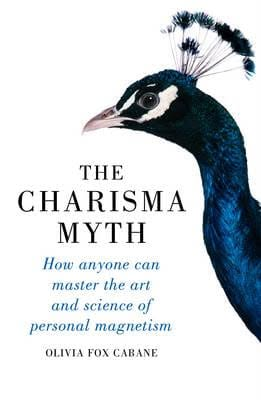
Libro: The Charisma Myth

· One min read

The Charisma Myth, by Olivia Fox Cabane

Book 17 of 100

“Speak like you’re sharing a secret.”

alt text

For leaders, managers, speakers, or really anyone who wants to communicate better, this one is worth checking out.

One of the more interesting ideas in the book is that charisma isn’t necessarily something you’re born with. It can be practiced.

The way you listen.

How you carry yourself.

And how you make someone feel like they actually have your attention.

A lot of it comes down to presence, warmth, and confidence. I guess that’s what makes the concept useful.

You don’t have to become the loudest person in the room.

You also don’t need some larger-than-life personality.

Sometimes being charismatic simply means being fully present, knowing when to speak, and making people feel like the conversation actually matters.

If you’re a fan of Dale Carnegie and books about communication and influence, this is definitely something worth diving into.

After spending some time relaxing with narratives and fiction, I’m back to business and self-development reads.

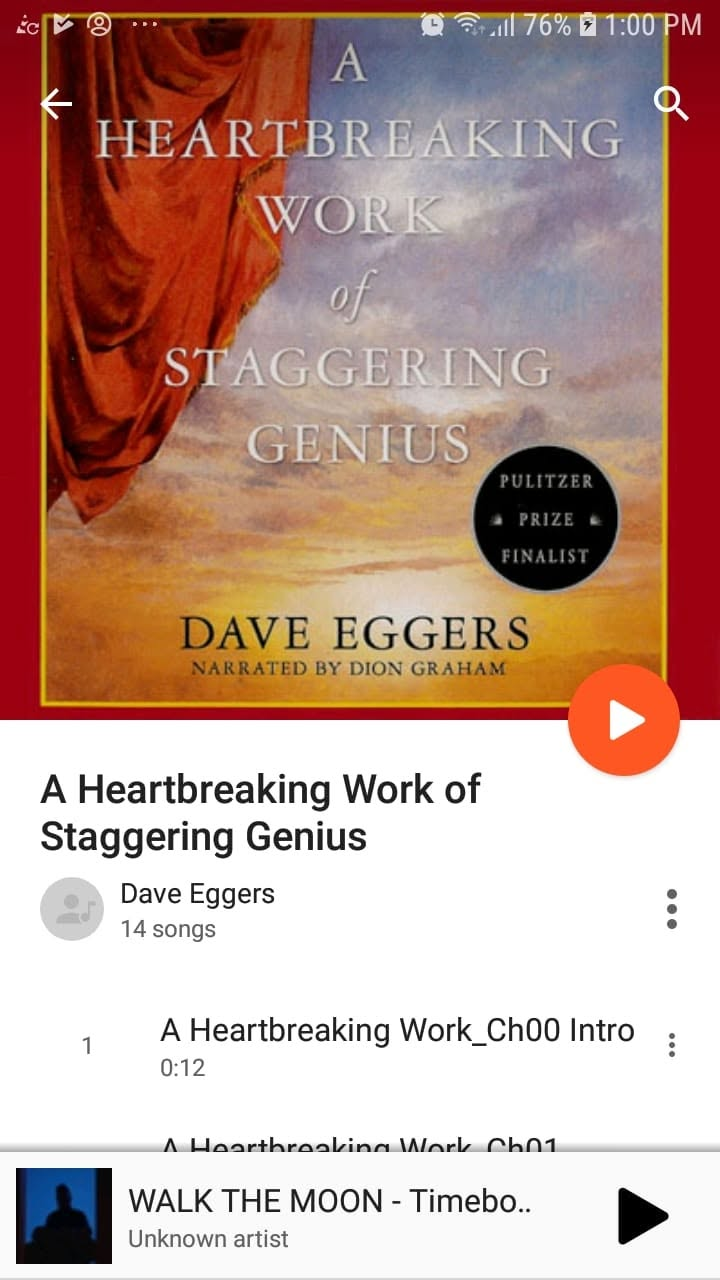
Libro: A Heartbreaking Work of Staggering Genius,

· One min read

A Heartbreaking Work of Staggering Genius, by Dave Eggers

Book 16 of 100

“I think if you’re not self-obsessed, you’re probably boring.”

alt text

Damn. This was such an emotionally exhausting read.

At times it feels funny, chaotic, self-aware, depressing, absurd, and deeply personal all at once.

Some people will probably love that style, others may absolutely hate it.

There are moments when Eggers seems to be telling you a story, then suddenly steps outside of it, comments on the fact that he’s telling you a story, questions his own motives, and somehow drags you along with him anyway.

It can get messy.

But there are also a lot of interesting thoughts buried between all that chaos, especially around grief, responsibility, growing up too quickly, and the strange ways people try to make sense of difficult experiences.

Not my favorite Dave Eggers read. But definitely memorable in its own weird way.

Still looking forward to checking out more of his work.

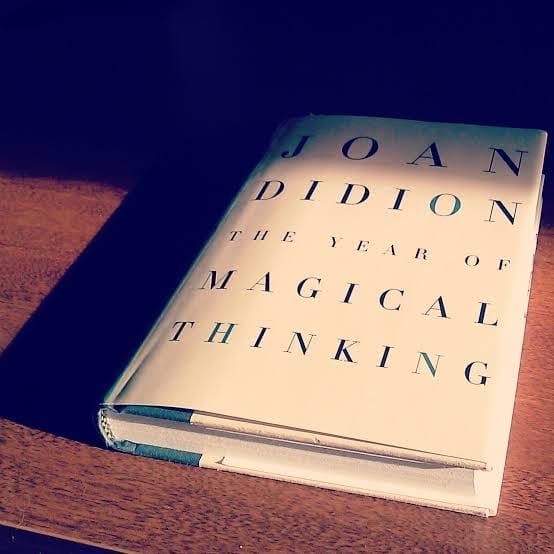
Libro: The Year of Magical Thinking

· One min read

The Year of Magical Thinking by Joan Didion

Book 15 of 100

“Grief turns out to be a place none of us know until we reach it.”

alt text

Damn. Such a depressing read.

It’s about losing someone and what that loss does to the people left behind. And even while reading through all of that grief, I still found myself hoping there would be some sort of silver lining waiting on the very last page.

There really wasn’t.

But there’s still so much courage contained between its covers.

Maybe not the kind that magically makes everything better, but the kind that lets you keep going even when things won’t ever be the same again.

Cry.

Accept.

Move forward.

I really admire the courage it took to write this. Still a hard book to finish though.

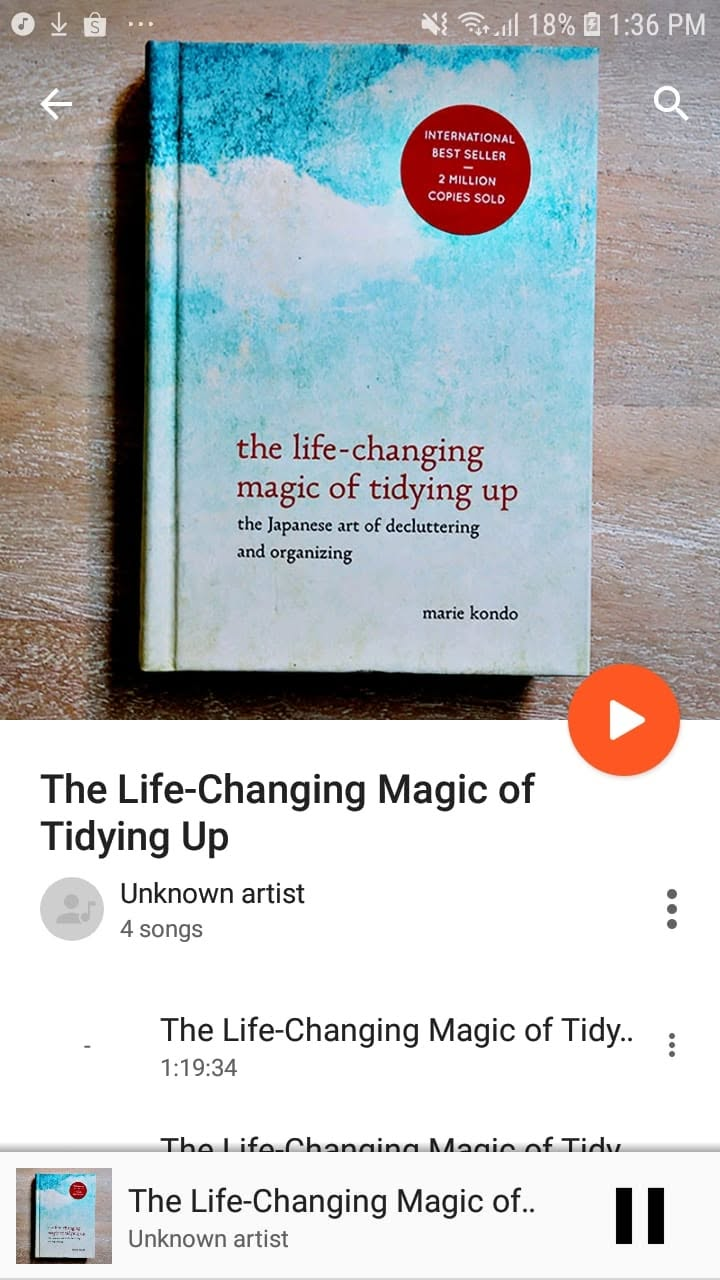
Libro: The Life-Changing Magic of Tidying Up

· 4 min read

The Life-Changing Magic of Tidying Up, by Marie Kondo

“People cannot change their habits without first changing their way of thinking.”

alt text

Now I understand the fuss around Kondo’s Netflix series.

Although, after reading the book, I think there’s a lot more to the idea than what usually gets reduced online to:

Does it spark joy?

And no, the answer is probably not to start throwing away things, or family members for that matter, just because they don’t.

The book is really more about changing how you think about the things you own, why you keep them, and what kind of space you actually want to live in.

A few takeaways that stood out to me:

  1. Start by knowing what you actually own.

    Objects can be counted.

    Sometimes that alone is enough to make you realize how much stuff you’ve accumulated without even noticing.

  2. The urge to clean is sometimes about something else entirely.

    People often suddenly feel like tidying up when they’re under pressure.

    Not necessarily because the room desperately needs cleaning, but because there’s something else in life they’re struggling to put in order.

    Cleaning gives you something visible that you can control.

  3. A clean room doesn’t automatically mean a clear mind.

    Tidying your physical space can give temporary relief.

    But if you let that feeling convince you that everything is suddenly fine, you might never deal with whatever psychological clutter was bothering you in the first place.

  4. Visible mess can distract us from the actual problem.

    Sometimes clutter is only the symptom.

    You can move things around, hide them in drawers, buy another storage box, and make everything look organized.

    But that doesn’t necessarily mean the problem has been solved.

    Sometimes you’ve just created a nicer-looking version of the same mess.

  5. Storage is not the same as tidying.

    Putting things away can create the illusion that the clutter is gone.

    Then the drawers fill up.

    The shelves fill up.

    The storage boxes fill up.

    And eventually the room is overflowing again.

  6. Sort by category, not by location.

    Instead of cleaning one room at a time, gather similar things together.

    Clothes. Books. Documents.

    Random stuff you somehow forgot you owned.

    Seeing everything in one place forces you to confront just how much of it there actually is.

  7. Treat tidying as an event, not an endless daily battle.

    Do the hard sorting once.

    Make the decisions.

    Then maintaining the space becomes much easier afterward.

  8. Discard first. Organize second.

    There’s not much point in finding the perfect storage system for things you don’t even need.

    Decide what stays first.

    Then figure out where everything belongs.

  9. Know what kind of life you’re trying to build.

    Don’t tidy just because the room looks messy. Visualize the destination.

    What do you want your space to feel like?

    Why do you want to live that way?

    That part probably matters more than which drawer your socks go into.

  10. And finally, examine what you own.

    Does it still matter to you?

    Does it serve a purpose?

    Does it, as Kondo puts it, spark joy?

If you think about it, there’s actually some overlap here with Lean thinking and, more generally, the idea of removing waste and keeping only what adds value.

And maybe that’s why the book works beyond just cleaning.

It’s not really about throwing things away.

It’s about becoming more deliberate about what deserves space in your life.

Ultimately, I think each of us still has to decide what is important and what is simply noise.

In the end, maybe the better question isn’t: What should I get rid of?

Maybe it’s: What is actually worth keeping?

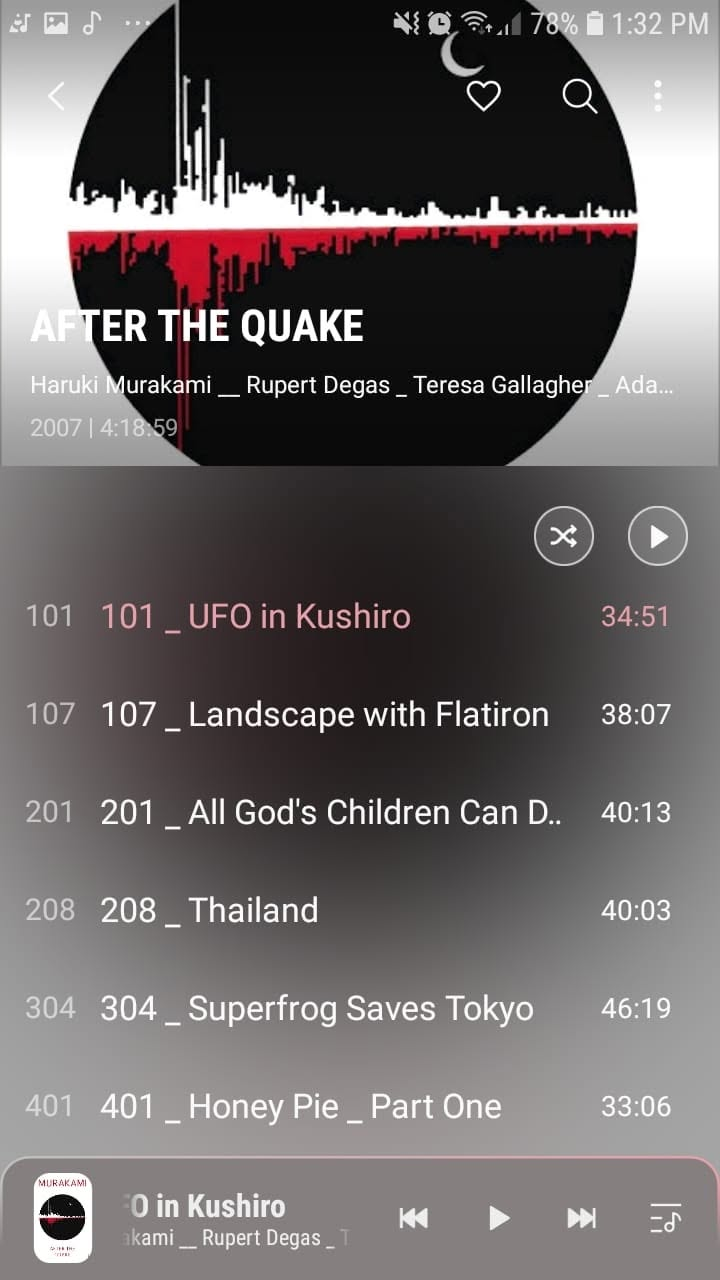
Libro: After the Quake

· 2 min read

After the Quake by Haruki Murakami

Book 13 of 100

“I want to write about people who dream and wait for the night to end; who long for the light so they can hold on to the ones they love.”

alt text

And that pretty much ends my journey through Murakami’s works.

There are still a few of his books that I haven’t downloaded or listened to, but after going through this many, I feel like I’ve gotten a pretty good sense of the man behind the stories.

A few observations:

  1. He likes to smoke.
  2. He likes pussies. Cats, I mean. Cats. His protagonists almost always seem to have one, lose one, look for one, or know someone who has one.
  3. He has clearly lived enough life to have a ridiculous amount of strange material to pull from.

His style definitely isn’t the conventional kind most of us are used to.

There isn’t always a captivating plot pushing you from one chapter to the next. Not every “why” gets answered. Loose ends don’t always get tied neatly together, and sometimes entire storylines seem to appear, intersect with everything else, and then disappear without giving you the closure you were expecting.

And yes, that can be frustrating.

But I think that’s also part of what makes his stories interesting.

Murakami leaves a lot of space for the reader to decide what things mean, how they see the characters, and whether any of those strange little experiences actually mattered at all.

And when you think about it, real life works a little like that too.

Not everything that happens to us has some grand meaning.

A lot of it is just noise.

Random encounters. Strange conversations. People who disappear from our lives. Things we worried about for weeks that eventually meant absolutely nothing.

Most of what we experience probably ends up becoming small trivialities somewhere in the larger story.

So maybe the choice is whether we spend our lives obsessing over every little thing that didn’t make sense, or simply accept that not everything needs an explanation and keep moving.

You can’t always decide where the current flows.

But you can decide what to pack into your ship.

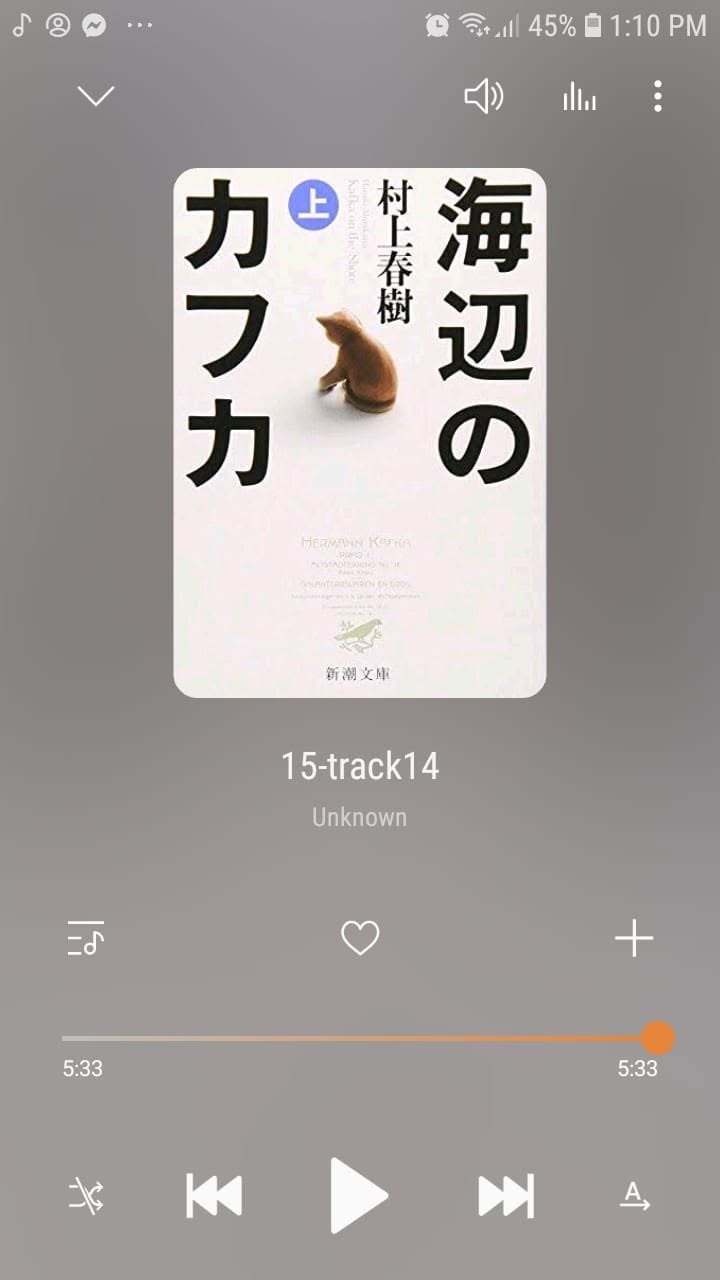
Libro: Kafka on the Shore

· 2 min read

Kafka on the Shore by Haruki Murakami

Book 12 of 100

“If you remember me, I don’t care if everyone else forgets.”

alt text

Damn. Such an inconclusive ending.

There were so many moments in this book where I kept waiting for everything to finally connect, like there had to be one neat explanation tying all the strange events together.

And then Murakami just say, Nope, those events won't connect like you expected them to.

You get dreams, memories, talking cats, strange coincidences, metaphors that may or may not be metaphors, and people drifting in and out of each other’s lives.

Then the book ends and you’re just left sitting there thinking:

Wait. That’s it?

But weirdly enough, that’s probably why it lingers.

Not because everything was explained, but because it wasn’t.

There are still things I keep thinking about even after finishing it, but the one that really stayed with me was:

Whatever happened to Hoshino after the cat answered him?

Did something actually change?

Was it just another strange encounter?

Or was that simply Murakami’s way of reminding us that not everything needs to be wrapped up neatly before the story moves on?

I honestly don’t know.

And maybe that’s the point.

Some stories end. Some just stop.

Libro: A Wild Sheep Chase

· One min read

A Wild Sheep Chase by Haruki Murakami

Book 11 of 100

“The light of the morning decomposes everything.”

alt text

Going through Murakami’s works sometimes feels like going through one long, vivid dream.

You have a nameless character looking for something almost mythical. Then strange people keep showing up at the worst possible moments. And finally, you get all these scattered details that feel huge while you are reading, but never actually tie themselves up neatly by the end.

And somehow, you just go with it.

You keep following the character deeper into this strange world because you feel like everything has to lead somewhere.

Then the book ends. You wake up.

For a few moments, you can still remember the fantasy clearly, the places, the people, the strange little details.

Then they slowly start to fade.

And all you’re left with is that lingering feeling that something happened, something probably meant something, but you can’t quite explain what.

Then you wonder: What the hell was that all about?

Libro: The Blind Willow, Sleeping Woman

· One min read

Blind Willow, Sleeping Woman by Haruki Murakami

Book 9 of 100

“Ordinary imperfect people always choose similarly imperfect people as friends.”

alt text

A strange mix of the ordinary, the different, and the surreal.

Since this is a collection of short stories, every few pages feels like stepping into a completely different little world. Some stories feel familiar, while others slowly drift into something weird, dreamlike, or slightly unsettling.

And somehow, that seems to be where Murakami is most comfortable.

You meet ordinary people dealing with loneliness, relationships, memories, strange encounters, and sometimes things that don’t really make sense at all.

Some stories left me thinking.

Some left me confused.

And some just ended before I could even figure out what exactly I was supposed to feel.

But I guess that’s part of the charm.

Ganbatte, Murakami-san!

Libro: The Elephant Vanishes

· 2 min read

The Elephant Vanishes by Haruki Murakami

Book 8 of 100

“People who go through heavy experiences like that are changed men. They change for the better or they change for the worse. On the good side, they become unshakeable.”

alt text

Damn. Going through Murakami’s books sometimes feels a lot like going through life itself.

There are parts you enjoy immediately, and then there are parts that feel completely irrelevant while you’re in the middle of them. With The Elephant Vanishes, I honestly didn’t start appreciating some of the stories until I was already near the end.

And yeah, I guess that’s pretty much how life works too.

You grow up and encounter all sorts of trivial things that don’t seem to matter at the time.

You meet people once and never see them again.

You get tired. You lose sleep.

You start carrying memories you wish you could forget.

And, apparently, if you’re living inside a Murakami story, you might also dance with dwarfs or hear someone banging on your window.

You’ll have to read The Elephant Vanishes for that one.

A lot of these moments can feel disconnected. Some of them might not even seem important when they happen.

But eventually, when you reach that last mile and look back, you realize that maybe not everything needed to have an obvious purpose.

Some things simply became part of you.

The people.

The strange moments.

The mistakes.

The things that made sense and the ones that absolutely didn’t.

Libro: Norwegian Wood

· One min read

Norwegian Wood by Haruki Murakami

Book 7 of 100

“Love is the loss of innocence.”

alt text

This one is definitely more than just a love story.

It’s about loss, loneliness, memory, and that strange feeling of trying to understand why certain people or experiences had to happen the way they did.

Sometimes a loss feels like it should be teaching you something.

Like there has to be some reason behind it.

Some explanation.

Some lesson you’re supposed to carry with you.

But sometimes you just don’t understand it. And maybe you won’t for a long time.

You just keep living, keep growing, and somehow learn to carry the things you never really got answers for.

That’s what stayed with me most about this one.

Apparently there's a Japanese film adaptation too. This is my third Murakami book, and I'm starting to recognize the way

Libro: The Wind-Up Bird Chronicle

· 2 min read

The Wind-Up Bird Chronicle by Haruki Murakami

Book 6 of 100

“A person’s destiny is something you look back at after it has passed, not something you see in advance.”

alt text

This one is honestly difficult to describe because of the way the story unfolds.

It starts off relatively grounded, but somewhere along the way, things become stranger, darker, and more disconnected.

And midway through, you start asking yourself:

Where the hell is this story actually going?

Characters appear with their own histories.

Strange events happen without much explanation.

Different timelines, memories, dreams, and realities start overlapping until you’re not even completely sure which parts are supposed to connect.

Still, I couldn’t shake the feeling that some of these characters belonged to an even bigger world, like maybe pieces of their stories were hiding somewhere in Murakami’s other books.

Maybe they are. Maybe they aren’t.

At this point, I’m starting to accept that Murakami probably isn’t going to explain everything anyway.

But if there’s one book so far that feels like an entire maze of complicated, interconnected stories, this is definitely it.

You keep following the turns, hoping everything will eventually make sense.

Then somehow, even when it doesn’t completely, you still find yourself thinking about it afterward.

Libro: Dance, Dance, Dance

· One min read

Dance, Dance, Dance by Haruki Murakami

Book 5 of 100

“Time solves most things. And what time can’t solve, you solve for yourself.”

alt text

Dansu, dansu, dansu.

Well, still trying to process this one.

It’s basically a weird, melancholy story about losing people, wandering around looking for answers, and trying to function when life just stops making sense.

People drop out of your life.

Relationships fizzle out.

And half the time, there’s zero closure or neat explanation for it.

Things just happen.

Murakami has this specific way of writing where everything feels dreamlike and slightly detached, but it somehow still hits close to home.

You don't always get a say in how things go. Sometimes the rhythm gets all messed up and you feel completely lost.

You just have to keep going anyway.

One foot in front of the other.

At least, that’s what I took away from it.

Dance, dance, dance.

Libro: Ready Player One

· 2 min read

Ready Player One, by Ernest Cline

Book 4 of 100

Best way to describe this one: NOSTALGIC.

alt text

Honestly, some parts of the story feels a little flat. You could probably squeeze it into one episode of a sci-fi series.

But what takes it to another level is everything wrapped around it.

The references to old-school RPGs, arcade games, music, movies, geek culture, and the early days of gaming give the whole thing a certain charm.

It feels like a giant love letter to a generation that grew up escaping into fictional worlds long before virtual reality became something we could actually imagine using every day.

That’s probably what made this one fun for me.

And yeah, I’ll definitely be watching the film adaptation too. There's already a queue of books and movies waiting, so we'll see when that happens.

But there’s also one thought that stuck with me after finishing it.

Aren’t we slowly moving toward something similar ourselves?

More and more of our lives now happen through screens.

Work. Entertainment. Friendships. Games.

Entire communities.

We build these digital spaces where we can be whoever we want to be, while the real world continues running somewhere in the background.

Maybe we’re not living inside the OASIS yet.

But sometimes it does feel like we’re already practicing for it.

I guess that’s one thought worth pondering.

Libro: Moneyball

· 2 min read

"If you challenge conventional wisdom, you will find ways to do things much better than they are currently done."

3/100

alt text

Just finished listening to Moneyball.

To be honest, it felt like three things wrapped into one:

  • A biography
  • A baseball crash course
  • A historical account of one of the most infamous GMs in sports history

I am not even a baseball fan, but what really hooked me was the problem-solving side of it all.

So, these were the variables:

  • The Oakland Athletics were running on a shoestring budget.
  • They were up against giants who could outspend them three times over.
  • If you play the exact same game as the big teams with only a fraction of their money, you lose.

So what do you do?

  • You stop trusting "the way it has always been done."
  • You throw out old scout biases.
  • And you look at the actual data.

Traditional scouts looked for guys who just looked like athletes. But the real game was finding undervalued guys who simply knew how to get on base. Walks and on-base percentage weren't flashy, but they won games.

(I hadn't heard about these terms before reading the book, but they were interesting enough that I ended up googling baseball basics.)

It made me think about how easy it is to lean on conventional wisdom because it feels safe. We stick to traditional playbooks and assume everyone else must be right.

When resources are tight, sticking to the standard mold will run you into the ground.

Sometimes you have to step back, and ask better questions.

You know, find the real signal through the noise.


I haven't yet watched the film adaptation, but I'm eager to see how the main protagonist is portrayed and which characters make the cut.

Will be the last audio from Michael Lewis for now.

Next up: Ready Player One.

Libro: Flash Boys

· One min read

"An endless quest by human beings to gain a certain edge in an uncertain world."

Book 2 of 100

alt text

Honestly, this one is probably best understood in print.

Like most of his work, it digs into how the public market actually works behind closed doors.

Controlled by a tiny circle, and completely invisible to almost everyone else.

People were literally tunneling fiber optic cables straight through mountains just to shave off three milliseconds.

It is crazy to realize how much of the stock market isn't about investing at all. It is just an engineering arms race.

Who has the shortest wire, who sits closest to the servers, and who can jump in front of an order a fraction of a microsecond faster.

Working with infrastructure myself, seeing how latency can make or break billions of dollars was both cool and slightly terrifying.

Will be following this with one last piece from Michael Lewis.

After that, I'll probably jump to something a lot lighter.

Libro: Boomerang

· One min read

"If we refuse to regulate ourselves, the only regulators will be our environment."

Book 1 of 100

alt text

First book of the year.

This is actually my second one from Michael Lewis, and I'm already finding his work pretty stimulating. Honestly, all of his books seem better suited for print rather than audio because of how dense the details get.

The guy is definitely a master at explaining finance.

The book takes you on a wild tour of different countries struck by the 2008 financial crisis, from Iceland and Greece to Ireland and even parts of the US.

What makes it wild is how the book shows that cheap credit didn't just break the economy. It exposed the quirks and flaws of each country's culture. Once the money became free, people everywhere just went a little crazy in their own unique way.

Really fascinating read on what happens when human nature meets easy debt.

Libro: Natural Born Heroes

· One min read

"Heroes, after all, aren't measured by the stories they told, but by the stories told about them."

Book 83 of 100

alt text

83rd on 365th.

Last read for 2018.

A lot of learnings and a lot of fresh perspectives packed into this one.

It blends World War II history, kidnapping a Nazi general in Crete, and the forgotten physical skills of ancient endurance athletes and resistance fighters.

Parkour, natural movement, fascial elasticity, and burning fat for fuel instead of relying on pure carbs.

It really rethinks what human endurance and strength are supposed to look like.

I came up short by 17 reads to hit the 100 mark, pero it is still okay.

83 books in a single year is still a solid run.

Setting up a new list for the coming year.

Anotha one!

Libro: Player Piano

· One min read

"Not a book of what was, but a book of what could be."

alt text

For a satire written more than five decades ago, this eerily mirrors how much we rely on technology today.

In our generation's case, it feels uncomfortably close to Black Mirror.

Machines taking over human purpose, automation running everything, and people left wondering where they actually fit in.

The ideas feel a bit scattered at times, but it still challenges your perspective.

Just like that eerie chill you get right after watching a good Black Mirror episode, this one leaves you sitting with a lingering question:

What comes next?

Libro: Gone Girl

· One min read

After a lot of life changes and busy days, I was finally able to get back and finish the last part of this audiobook.

I must say, this one lives up to the hype of being addictive and thrilling. But man, that ending really leaves you with a bitter taste in your mouth.

alt text

So naturally, I watched the movie right after.

It was pretty good too. I was actually expecting some major deviations near the end, since film adaptations usually change things up. But for the most part, it just condensed a few scenes.
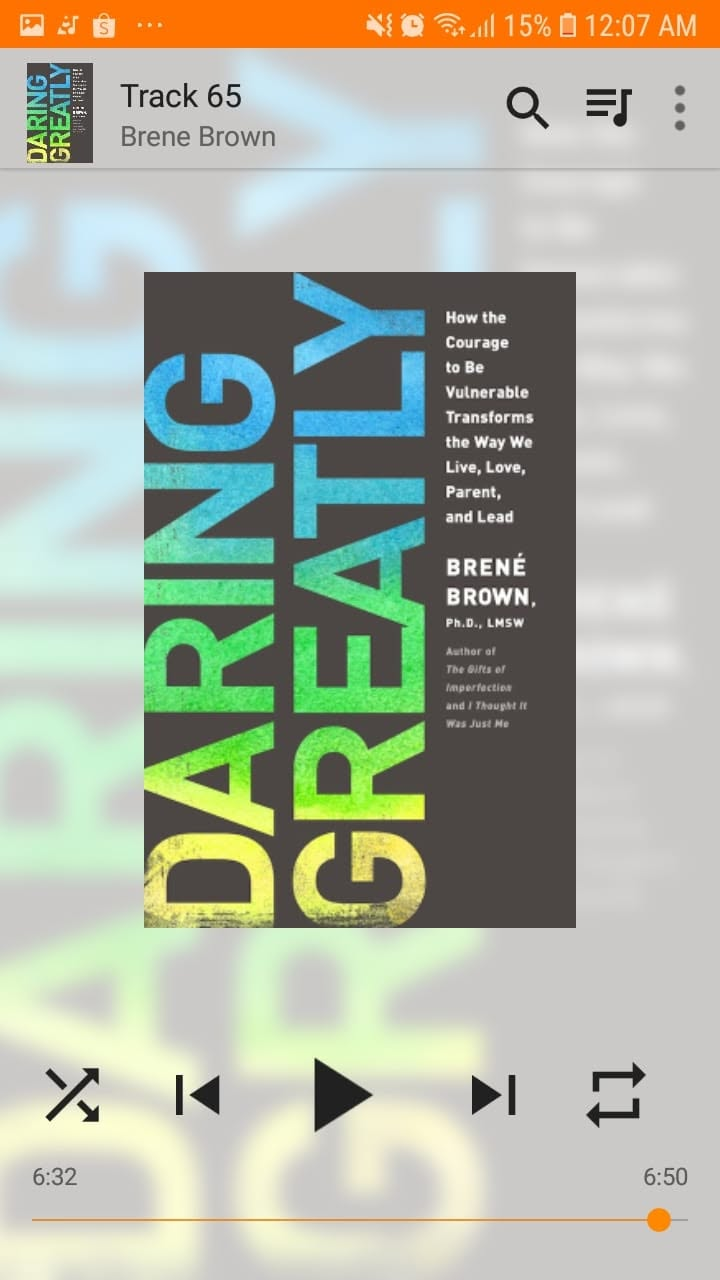
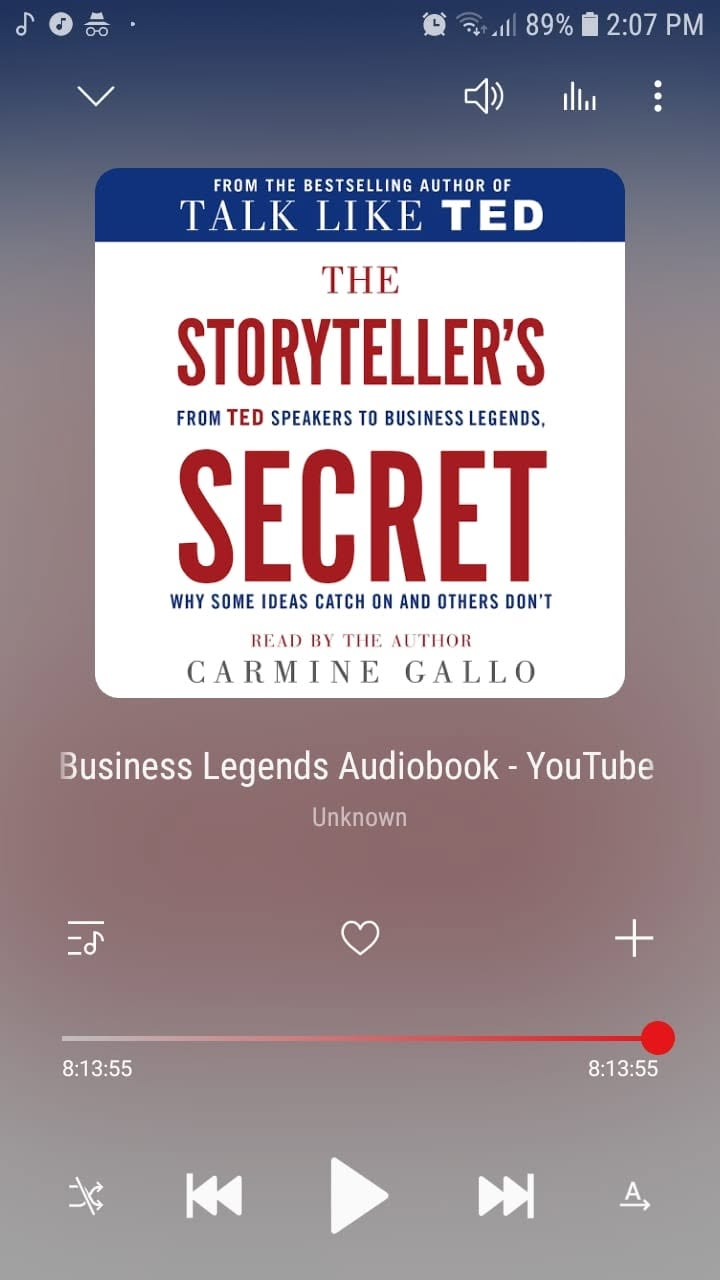
Overall, it is a solid story.

When you really think about it, the dark humor here is that it almost mirrors how marriage works.

No matter how dysfunctional and toxic things get, you stay locked in with your partner.

You sort through the mess, even if the mess is completely insane.

Libro: The Zookeeper's Wife

· One min read

"How do you retain a spirit of affection and humor in a crazed, homicidal, and unpredictable society?"

alt text

First read for December, and 79th for the year!

This had so much potential to tell the incredible, untold true story of the Zabinskis.

Hiding hundreds of people inside the Warsaw Zoo right under the noses of the Nazis is such an insane, heroic premise.

I think it just fell short on the writing style.

The pacing felt a bit misaligned with the gravity of what was happening, almost too detached or flowery when the story itself needed raw grit.

Still, I think the history behind it and what that family pulled off is undeniably remarkable.

Libro: The Rosie Project

· One min read

"I may have found a solution to the wife problem."

Book 78 of 100

alt text

Mildly entertaining read.

Honestly, the whole dynamic felt like fan fiction of Sheldon and Amy from The Big Bang Theory.

A socially awkward genetics professor making a 16-page questionnaire to find a wife, only to get completely derailed by a spontaneous woman who meets none of his criteria.

Listening to non-stop business books gets exhausting after a while. The core ideas start repeating themselves, just repackaged with different buzzwords.

I think I'll stick to fiction and good narratives to close out the year.

22 more to go to reach the 100th read, and 27 days left until the 365th!

Libro: This Is the Story of a Happy Marriage

· One min read

"The quality of life is defined not by its length but by its depth."

Book 77 of 100

alt text

When you have been through life's lowest valleys, you appreciate the joyous peaks so much more.

This collection of essays takes you through that spectrum from a deeply personal, honest perspective.

The author writes about divorce, finding real love, committing to the craft of writing, friendship, and loss.

It is warm, vulnerable, and grounded.

A wonderful read and definitely worth listening to, whether you are a woman or a man.

23 more to go before the 365th day!

Libro: Eat and Run

· One min read

"Strength doesn't come from physical capacity, it comes from an indomitable will."

alt text

A great finish right before stepping into next week's new chapter.

Scott Jurek's story is pure grit.

Running 100-mile trails on a 100% plant-based diet sounds impossible to most people until you see how meticulously he breaks down nutrition, recovery, and mental stamina. It is as much about discipline and mindset as it is about putting one foot in front of the other for 24 hours straight.

When your legs want to give up, it really just comes down to whether your mind refuses to quit.

Definitely one of the best reads of 2018.

Libro: How the Mighty Fall

· One min read

"The mighty can fall, but often they rise again."

alt text

Felt like a condensed companion to Chunka Mui's Billion Dollar Lessons, but it definitely stands on its own.

So how does a good-to-great company actually spiral down?

The author breaks the decline into clear stages, starting from hubris born of success down to grasping for salvation and capitulation. It shows how failure rarely happens overnight. It actually starts subtly when leaders get arrogant and lose discipline.

Fairly short and fairly useful.

And yeah, my fourth listen from Jim Collins!

Libro: Busting Vegas

· One min read

"Move the odds in your favor."

alt text

If there is one main takeaway from this read, that is to move the odds in your favor.

Another fast-paced, entertaining story about MIT math geniuses beating the casinos at their own game.

It dives past basic card counting into card steering, shuffle tracking, and exploiting physical dealer tells across European tables.

It reads more like a heist thriller than a non-fiction book.

At the end of the day, it is all about finding a tiny statistical edge in a system built to make you lose, and having the discipline to push it relentlessly.

Another fun one down in the Ben Mezrich marathon.

Libro: Woolly

· One min read

"We never stop hunting. We are the predator."

alt text

Starting the week with elephants and ancient giants.

It is eye-opening to learn how these massive species thrived for millennia before humans showed up, and how quickly we pushed them straight toward extinction once we did.

The book follows a team of geneticists trying to do the reverse: resurrect the woolly mammoth using CRISPR to edit cold-resistant genes into Asian elephant DNA. The idea of de-extinction to restore the Siberian tundra sounds like pure sci-fi, but the science behind it is very real.

Another fast, wild read in the Ben Mezrich marathon.

Libro: Animal Farm

· One min read

"All animals are equal, but some animals are more equal than others."

alt text

After several stalled attempts to get through 1984, I decided to pick up another piece of George Orwell's work instead.

Humans corrupting other humans. Using barnyard animals to mirror human society and political rot was pure genius.

It starts with good intentions and idealistic revolutions, only to end right back where it began under the boot of a new ruling class. The way language slowly gets rewritten to justify hypocrisy hits a bit too close to home.

It might be styled as a simple fable, but it is undeniably powerful.

A great start for the month.

Libro: The 37th Parallel

· One min read

"Perhaps, there might be actually life outside of our perspective."

Book 71 of 100

alt text

Just the right non-fiction to wrap up the month.

My second read from Ben Mezrich, and he keeps that signature fast-paced storytelling going.

This one follows a Colorado sheriff's deputy investigating bizarre cattle mutilations and UFO sightings, connecting the dots straight across a single line of latitude spanning America.

Whether you buy into the extraterrestrial theories or stay skeptical, it is an entertaining dive into unexplained phenomena and government secrecy.

Next up: Animal Farm.

29 more to go to reach the 100th mark, and only 2 months left until the 365th day!